Ten hours a night. Two hundred nights a year. One bulb. That is the entire setup behind the most common lighting question I get: what does it actually cost to leave the porch light on? Most people have never priced it out, so let us price it out kindly, with round numbers and no judgment about the bulb currently in the fixture.
The Symptom: A Bill You Never See Itemized
The cost hides because it is small per night and never appears on its own line. Nobody gets a bill that says porch light, $21. It shows up as a few unexplained dollars spread across every winter month, which is precisely the kind of leak people ignore for a decade. The fix starts with naming the bulb you have.
Diagnosis One: The Old Incandescent
A classic 60-watt incandescent burning ten hours a night uses about 0.6 kilowatt-hours. At roughly sixteen cents per kilowatt-hour, close to the recent national average but check your own rate, that is about a dime a night. Call it twenty dollars a year for one bulb, and more like sixty if you run a trio of bulbs at the porch, the garage, and the side door. Not a crisis. But twenty dollars a year, forever, for the least efficient light in the house, is worth five minutes of your time.
Between those two sit the halogen flood and the CFL, and both belong in the past. A halogen porch flood can draw four or five times what an LED uses, aimed at light that mostly lands on the porch ceiling anyway. CFLs hate cold, warming up slowly all winter until a January porch is lit by something the color of weak tea. If either one is in your fixture, the LED swap is not a decision, it is a mercy.
Diagnosis Two: The LED Swap
A 9-watt LED bulb in the same socket produces similar brightness for about a sixth of the energy. Same ten hours, same rate, and you are down to under two cents a night, or roughly three dollars a year. The swap pays for itself inside a season and then keeps paying for years, which is why this is the first fix on every list, including this one.
Diagnosis Three: The Fixture That Runs on Daylight
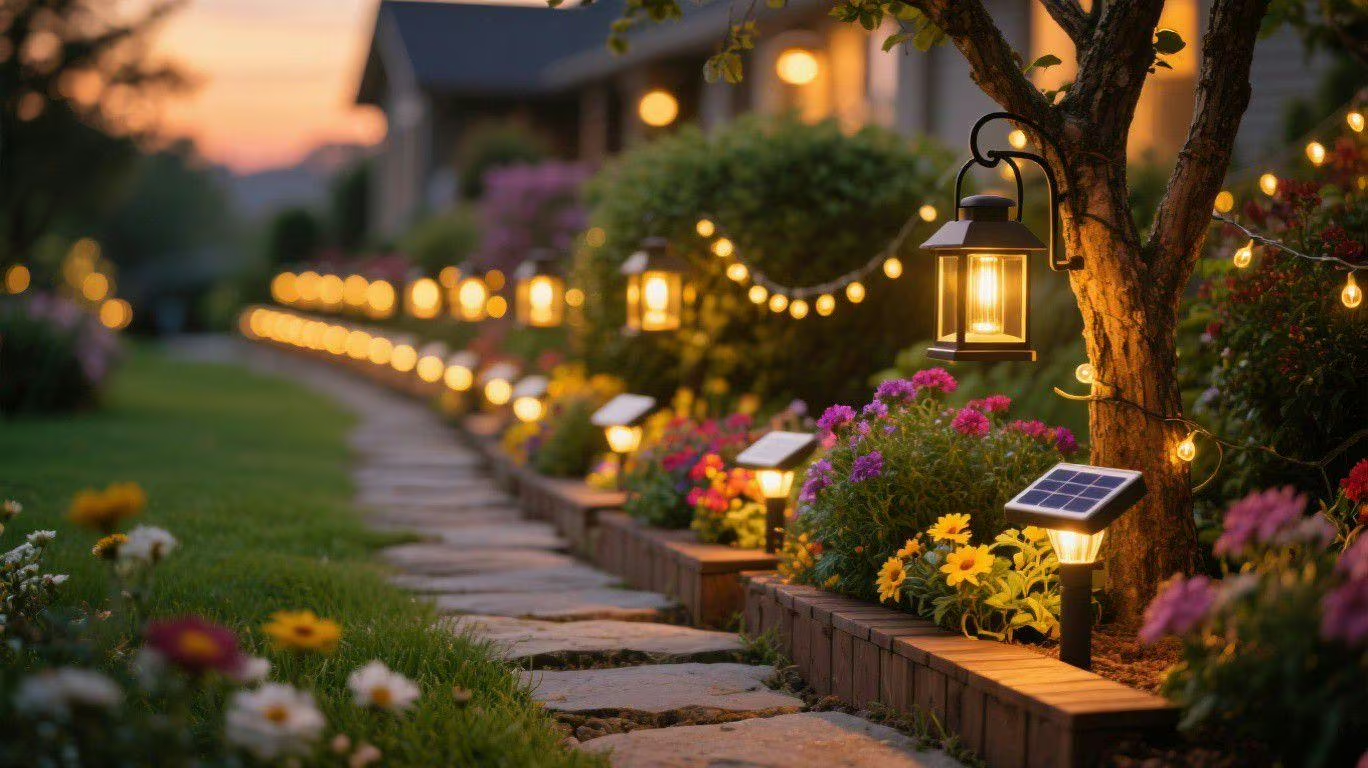
The third option removes the meter from the equation entirely. A solar wall light charges its own battery all day and costs nothing per night to run. A warm lantern-style solar wall light at the door gives you the dusk-to-dawn look for free, and a brighter motion-sensing solar wall light covers the driveway side where you want punch only when someone arrives. The catch is placement: the panel needs real sun, so a deeply covered porch may still belong on house power.
The Security Question, Answered Honestly
People keep the porch light on for safety, and the honest answer is that a constant light is a mixed bag. It makes the house look occupied only if observers cannot tell the difference, and anyone watching a street figures out a dusk-to-dawn schedule in about one evening. What motion does better than steady light is draw attention, and attention is what opportunists avoid. A light that snaps on when someone crosses the driveway is doing more work than one that glows all night, whether it is solar or wired.
One upgrade worth making while you are up there: put the wired fixture on a photocell or a timer so it earns its keep only during hours that matter. A photocell switches the light on at dusk and off at dawn, which is the schedule most people actually wanted when they started leaving the bulb on around the clock. Add motion to that and the fixture shifts from decoration to sentry without adding a cent to the bill.
Where the Real Money Lives
Keep perspective: a porch light is a rounding error next to landscape lighting, floodlights, and the holiday display. If you want the full version of this math for an entire yard over five years, we ran the numbers in a solar versus low-voltage cost comparison, and the totals are more dramatic than any single bulb.
The same arithmetic applies to the December display, just faster. A few hundred watts of old incandescent holiday strings running six hours a night through the season costs roughly the price of a large pizza in electricity, while the LED or solar equivalent costs about a slice. Small either way, but the display runs forty nights and the habit runs for years.
The Five-Minute Fix, in Order
Do this tonight, in this order. Look at the bulb in your porch fixture and read the wattage off the glass. If it says 60 or 100, replace it with an LED the next time you are at the store. If the fixture gets decent sun, consider a solar replacement when it dies, and pick motion mode for anything aimed at the driveway rather than the street. Then stop thinking about it. Twenty saved dollars will not change your life, but a yard that lights itself while costing nothing to run is a genuinely better system, and it starts with one bulb.