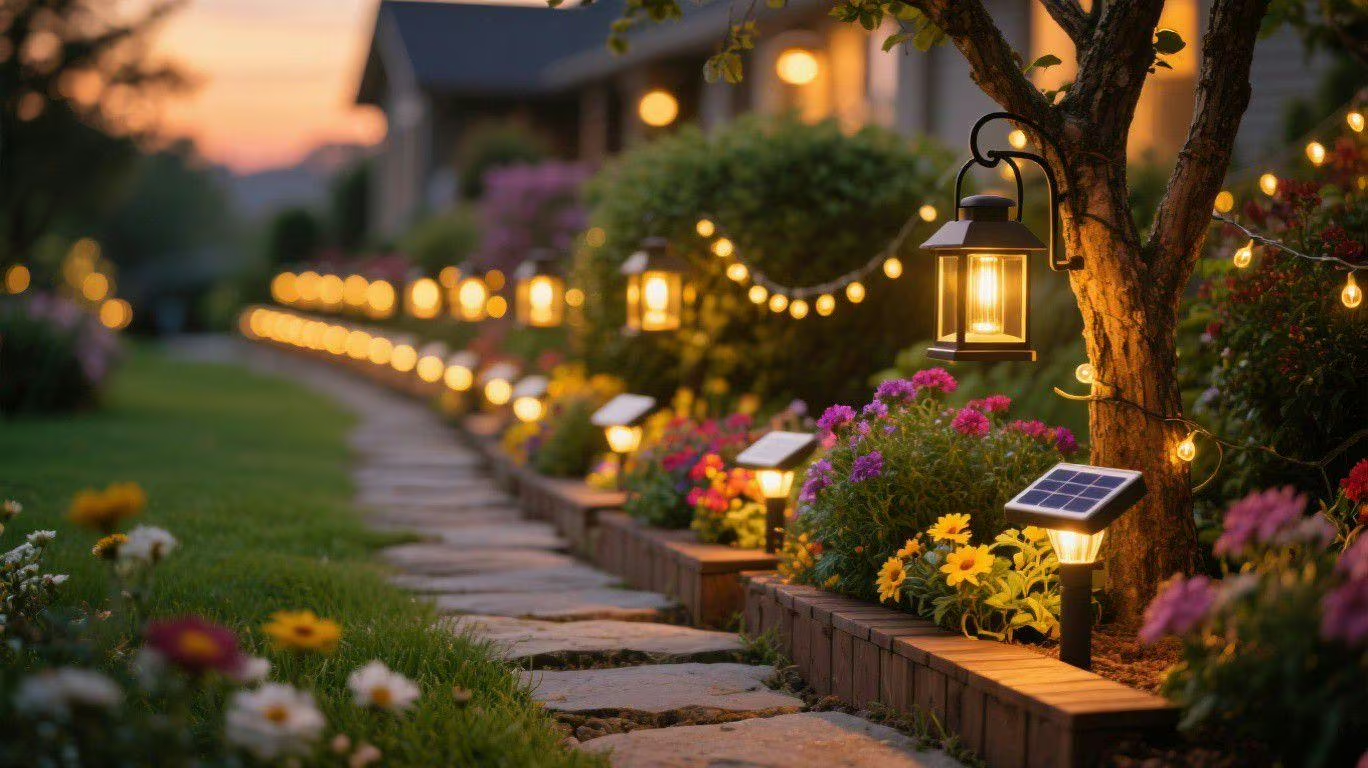
What if changing the yard from Halloween to the holidays took fifteen minutes instead of a Saturday with a drill in one hand and wire cutters in the other? I started asking that after watching a neighbor rebuild her entire display four times a year, every year, from scratch. Her answer, eventually, was to stop remounting anything and start building mounts that stay. The swap became something her kids could do.
The Problem: Every Season Starts with Hardware
The symptom is familiar. Strings come down in a hurry in January, hooks stay bent, adhesive pads rip off paint, and by October you are drilling new holes two inches from last year’s holes because the old ones stripped. Every seasonal change costs an afternoon and a little more of the fence. The underlying cause is that the mounts are temporary while the seasons are permanent. Flip that, and the work mostly disappears.
There is a second cost that is even less visible: the seasonal swap quietly damages the surfaces you love. Every reinstallation means new screws in the fence rail, new tape on the siding, new holes a quarter inch from last year’s holes. Over a few years the rail end looks like pegboard and the trim carries the ghost of every October adhesive. Permanent mounts with swappable fixtures end that too.
Fix One: Anchor Plates with a Twist-Lock Head
The core idea of the whole system: a small permanent plate, and a fixture that twists onto it in a second. The plate is a disc or bracket with two to four studs, screwed once into the fence post, the rail end, or the fascia. The fixture side gets a matching keyhole plate, which is a plate with holes shaped so it drops over the studs and rotates a quarter turn to lock. After that, changing what stands on that spot is literally a twist.
This is where an adjustable solar spot light earns its keep all year. On a twist-lock plate by the walk, it uplights the maple in summer, aims at the pumpkins in October, and swings to the evergreen in December, with zero new holes drilled after the first day.
The retrofit for existing fixtures is easier than it sounds. Most stake and spot lights have a standard quarter-inch mounting hole on the back or the base, and generic twist-lock plate kits adapt to it with two small screws. If a fixture has no hole at all, a bracket with a threaded post and a wing nut gives the same one-handed on and off. The rule I follow: if a fixture takes more than ten seconds to remove, it gets reworked.
Fix Two: Carabiner Loops for Strings
Strings are the other half of the problem, and the fix is small stainless eye hooks set permanently along fence tops and rail lines, one every few feet, installed once and painted to match. String lights get short loops of wire or small key rings tied in at matching intervals, and the swap becomes clipping solar string lights along the line like hanging towels. Unclipped in spring, the hooks disappear visually and nothing has been stapled to anything.
Two cautions from experience. Match the carabiner or ring size to the hook before buying in bulk, because nothing in hardware is as standardized as it looks, and use stainless everything. Zinc-plated hooks rust into the wood in one wet season and stain the paint below them.
For fences, set the eye hooks on the inside face of the posts rather than the top edge. Tops collect water and snow, rot faster, and put the hook where covers and sleeves snag it every fall. Inside faces stay drier, hide the hardware from the street, and put the string exactly where it needs to be to light the yard side.
Fix Three: Keyhole Plates for Wall Fixtures
The same twist-lock logic works vertically for anything mounted flat to a wall, with the plate carrying the weight on screws in wall studs or solid trim. A projection light over the porch, for example, can shift with the calendar: a color-changing mandala projection light for the party months, a plainer warm sconce for winter, same plate, ten-second change. Wall swaps are the ones people do most often once they realize the plate is already there.
The Hardware List, All at Once
- Stainless eye hooks in two sizes, for string lines and hanging fixtures.
- Small stainless carabiners and key rings, matched to the hook diameter.
- Twist-lock or keyhole plate pairs, available as generic mounting kits.
- Exterior screws sized for your surface, and an outdoor-rated drill bit.
- A grease pencil to mark permanent spots so every season uses the same points.
Install day tips: mark every planned mount point with a grease pencil first and walk the yard once before drilling anything. Half the points will move once you see them in place, and pencil wipes off. Set the wall plates at a consistent height, roughly chest level, so different fixtures land at the same spot every season without measuring twice.
Total cost for a typical yard sits somewhere south of a nice dinner, and the kit pays for itself the second season, in drill batteries and patience alike. Install the plates and hooks once on a free Saturday, mark the spots, and from then on the seasons are a swap, not a project.