One hundred dollars is not a lighting budget. It is dinner for four, or a tank of gas, or half a video game. And yet spent in the right order on the right three things, it is enough to change how a yard works after dark. I have done this build twice now, once at my place and once at my sister’s, where the side gate stayed dark for six years because the project always felt bigger than a weekend.
Buy One: The Motion Light at the Door
Roughly twenty dollars goes to a motion-sensing wall light at the entry, and it earns its slot first because it does the most work per dollar. A 100 LED solar wall light by the door handles trash nights, late arrivals, package drops, and the general question of what is moving out there, all while charging itself. Mount it high under the eave with a clear view of the walkway, and it becomes the fixture you stop thinking about entirely, which is the highest compliment a light can get.
Two placement notes make or break this fixture. Aim the sensor across the approach rather than straight down, so it catches a person walking in rather than every raccoon passing under the door, and keep the panel side out from under the eave so it actually charges. A motion light that never triggers, or one that fires at every falling leaf, usually has an aiming problem rather than a quality problem.
Buy Two: The Six-Pack for the Front Walk
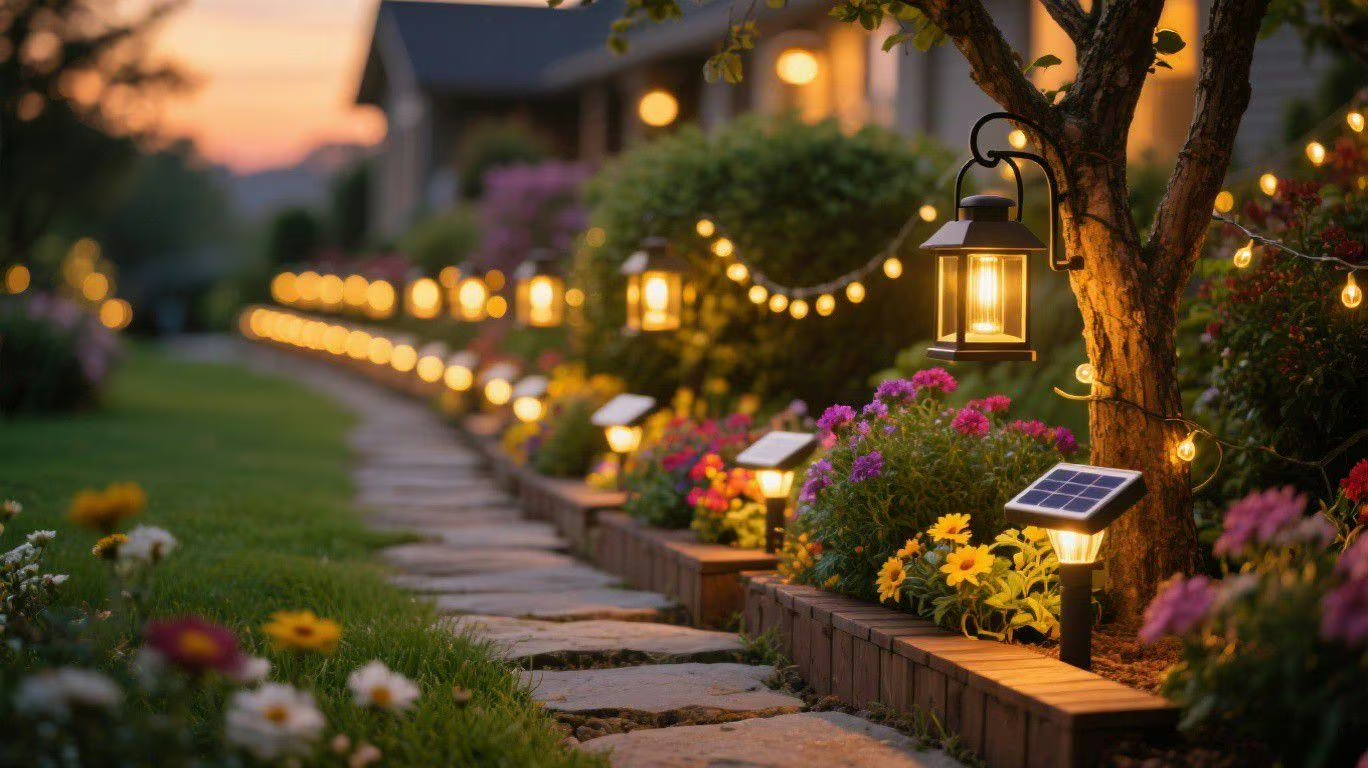
The next forty dollars is the single highest-impact visual purchase in outdoor lighting: a matched set of path lights. A multi-pack of solar pathway lights along the front walk does more for how the house reads from the street than anything else at this budget. Even spacing matters more than brightness here, so lay them out with consistent gaps, keep heads at matching heights, and resist adding a fixture to fill every dark inch. Six well-placed lights look intentional. Nine crowded ones look like a runway.
Buy Three: One String, One Anchor
The last twenty dollars buys atmosphere. One set of solar string lights, hung on a single defined anchor like a pergola beam, a fence section, or the railing by the seats. The discipline matters: a string with a clear beginning and end looks designed, while a string wandering around the yard looks like it escaped. Warm white, one mode, set to steady glow. This is the purchase guests actually notice and comment on.
Where Not to Spend the Rest
Hold the remaining twenty dollars instead of spending it, because at this budget the classic mistakes are all impulse buys. Skip color-changing path lights for a front walk, which cycle through shades all night and read as restless rather than calm. Skip the cheap single-bulb novelty fixtures, solar rocks, glowing butterflies, things that look like toys in daylight. And skip doubling the string count before the first three purchases have been in the ground for a month. The reserve is better spent on a spare set of rechargeable cells or a bag of replacement stakes, because the battery and the stake are the two parts that actually fail.
The other classic waste at this budget is brightness nobody can use. Doubling the lumen count on a residential walk mostly buys glare, and the neighbors will notice it before you do. The three fixtures named above are chosen partly because their output suits their jobs, which is a plain way of saying the walk light lights the walk and nothing else.
Phase Two: The Next Hundred
If the first hundred works the way it usually does, you will know within three weeks exactly what the yard still needs, because you will have used it at night. The second hundred should follow the gaps, not a formula: stair lights if there are steps, a spot light for a tree worth showing off, a second string if the first one became where everyone sits. That order, observe then buy, is what separates a lit yard from a pile of fixtures.
One warning from experience: install the whole plan in a single afternoon, not spread across weekends. Half-installed lighting is how boxes end up living in the trunk of a car until spring, and a plan that waits is a plan that quietly dies.
Do the first three buys in one order, install them in one afternoon, and give it two weeks of nights before adding anything. A hundred dollars, spent in order, is genuinely enough.