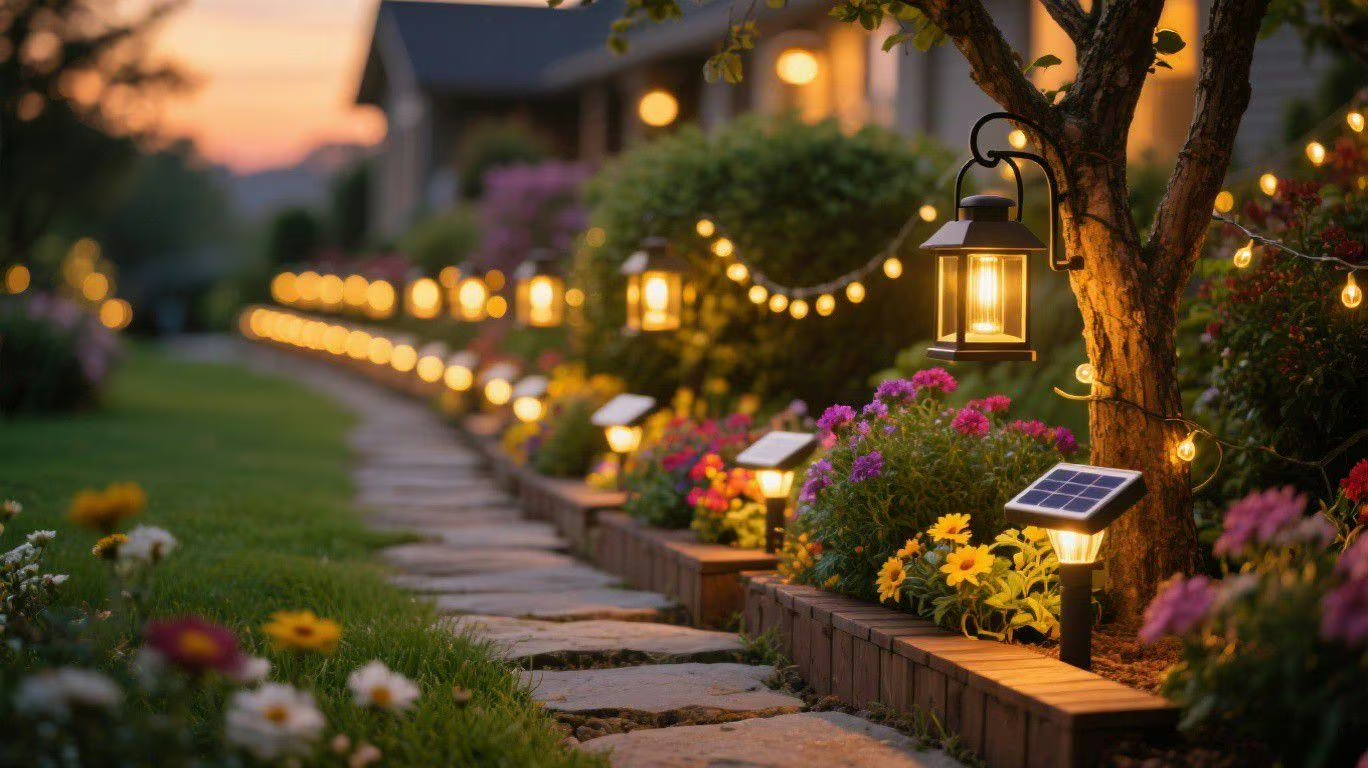
An arrival sequence is the chain of lit moments between the curb and wherever a person is ultimately trying to go. Suburban houses have a short one, maybe forty feet from driveway to door. A lake property has a long one: the end of the gravel drive, the door, the path around the side, the fire pit, and finally the dock, with dark water on one side of the last stretch the entire way. Lighting a lake house well means lighting that chain in order, not scattering fixtures around the yard and hoping.
Start Where the Car Stops
Guests at a lake house tend to arrive late, tired, and after a drive that ran longer than the map promised. The first job is the parking area. You do not need brightness there, just orientation: where the edge of the gravel is, where the first step is, and which direction the house is. A couple of modest fixtures on posts or trees, placed low enough to light the ground without shining into windshields, do it. Warm white matters more than output here, because a blast of white light at the end of a dark rural road feels like an interrogation rather than a welcome.
If the drive is long, resist the urge to line the whole thing. Every fixture is another panel to keep clear of leaves and another thing to mow around. Light the decision points instead: the turnoff, the parking area, and the start of the walk. Darkness between pools of light is part of the charm of a lake place, and cheaper to maintain.
If the drive crosses a ditch or a culvert, light that hazard specifically, because it is the one feature headlights do not reveal until it is too late. A single fixture set back from the edge, aimed low across the crossing, marks the drop without turning the approach into a runway. Rural arrival is mostly a game of pointing feet at safe ground, and every fixture earns its spot by doing exactly that.
The Door: One Fixture That Never Fails
The entry light is the single fixture the whole household depends on, because it is the one that gets you inside with the groceries and the flashlights. Give it the best sun on the property and pick something with motion sensing for the practical version. A motion-sensing solar wall light at the door covers late arrivals, garbage-raccoon detection, and the walk to the woodpile with one installation. Mount it high, under the eave if you can, so it clears snow and keeps its panel dry.
The Path Down to the Water
The side path to the dock is where lake lighting earns its keep, because it is the stretch with the roots, the uneven pavers, and the drop-off toward the water. This is a path-light job, evenly spaced, with heads low and aimed down so the glow stays on your feet instead of in your eyes. A multi-pack of solar path lights run down the landward side of the walk marks the safe edge and quietly tells everyone which side the water is on.
Two placement notes from experience. Keep the last fixture a few feet back from the dock itself so the edge stays visually obvious as a transition, and set the spacing by walking the path at night once with a single fixture, moving it until the pools of light just overlap. Spacing that looks generous on paper always reads darker in person.
The Dock Edge Is Its Own Project
Everything changes at the waterline. Fixtures out on a dock take spray, wake, ice lift, and UV from both sides, and a fall into the lake is fatal in a way a fall onto grass is not. We have written a whole piece on what actually survives on docks and piers, and the short version is this: use fewer, tougher fixtures, mount them to the structure rather than setting them on surfaces, and light the edge line rather than the planking. The goal is that anyone walking out at night can see exactly where the boards end.
Bugs and the Case for Warm Light
Lakes come with insects, and insects come with opinions about light. Cool, blue-white light pulls them in from across the water, while warm light attracts noticeably less attention. Keep every fixture on the property in the warm range and you cut down the swarm around the door and the dock stairs without doing anything else. Aim heads down and shielded, skip uplights aimed at the trees, and do not point anything out across the water. Flat, low, warm light over the areas people use is the whole recipe.
One honest admission: warm light reduces the swarm, it does not end it. Dinner on the deck in July may still need a fan or a trap, and if the bug pressure near your water feature is serious, place any zapper well away from the seating, down by the water where the insects actually live. The goal is that the conversation stays about the sunset instead of the mosquitoes.
The Off-Season: Lights That Mind the House
Most lake houses sit empty for stretches, and lighting is one of the few things that can look after the place while nobody is there. Photocell fixtures turn themselves on at dusk all winter without a timer, app, or wifi, which makes the house look visited on the random Tuesday a neighbor drives past. Before you close up for the season, pull anything that sits in the splash zone, clear every panel of leaves and pollen, tilt the remaining panels steeply for the low winter sun, and swap out any battery that was already getting weak in summer. A half hour in October saves a March of troubleshooting.
Start with the sequence and buy in that order: door first, path second, parking third, dock last. Each stage works on its own, so the property gets safer and more usable after every single purchase instead of only when the whole plan is done.