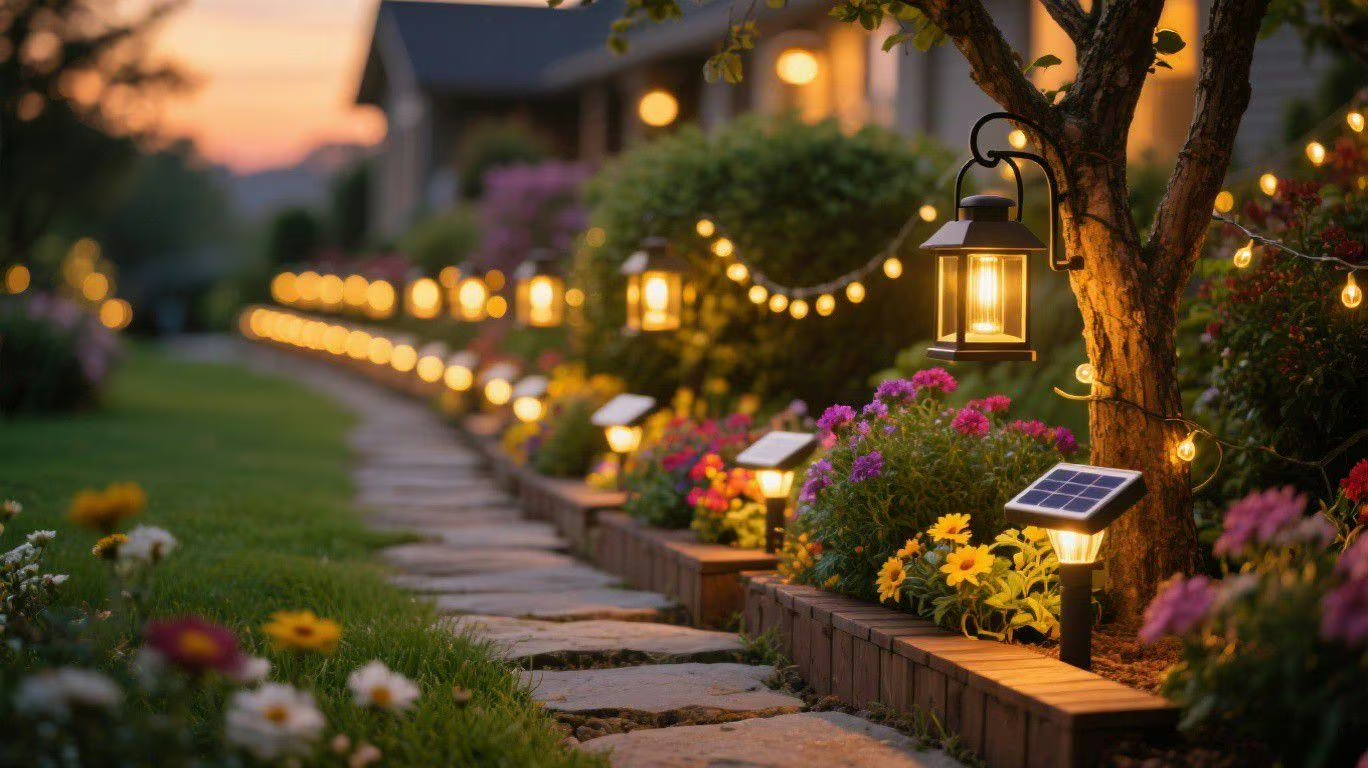
Here is the warning before anything else: buyers do not tour your house first. They drive past it at 5 p.m. on a gray November weekday, and since daylight saving ended on the first of the month, that is full dark. If the exterior reads dead, the showing is over before the lockbox opens. Winter staging is mostly a lighting problem, and it is a lot cheaper to fix than the kitchen.
The Entry Glow Buyers Remember
One warm light at the door does an outsized share of the work. A lantern-style fixture in warm white reads as home from the street in a way a bare porch bulb never will. Skip the blue-white color temperatures for staging. They photograph cold and they make siding look gray. Dusk-to-dawn mode is what you want rather than motion, because a buyer’s drive-by should not depend on a sensor noticing them in time.
Numbers a Stranger Can Read from the Curb
If the buyer’s agent cannot find your house number at night, the showing starts with frustration, and frustration is not a staging mood. Lighted numbers are the cheapest fix in all of exterior staging. A set of solar lighted house numbers mounts by the door or on a post and solves the problem for under the cost of a tray of cookies for the open house. On a wider facade, a custom lighted address sign does the same job with more presence. Either one works every night, whether or not a showing is scheduled, which is exactly the point.
A Path That Says the Way In Is Safe
Walk the route from where a car parks to the door, at night, in the shoes of someone who has never visited. Every step should be legible. Evenly spaced path lights beat one bright flood, because regular pools of light tell the eye where to land next. Keep heads above the local snow line and clear them after each storm, because a buried path light is a wasted line item and a dark walk is a liability nobody needs in December.
The Zero Dead Units Rule
One flickering fixture undoes the whole story. It reads as deferred maintenance, and buyers extrapolate instantly from a dying light to a dying roof. From the first showing to closing, walk the property once a week at dusk and pull or repair anything that dims, flickers, or leans. Keep two spare fixtures in a closet for the nights something quits, the way you keep spare bulbs under the sink. This is the least glamorous advice in this article and the most important.
The money question, answered: none of this needs an electrician or a weekend. Every fixture named here is solar, installs with a screwdriver or a mallet, and moves with you to the next house when the sale closes. Buyers notice lighting that looks intentional, and sellers appreciate improvements that leave no manual behind. A system assembled in one afternoon can carry the listing from the first November showing to a February closing.
Lights That Work When You Are Not There
You cannot be present for every drive-by, and you should not try. Photocell and dusk-to-dawn fixtures switch themselves on at roughly the right minute all winter with no timer to forget and no app to log into. Motion lights cover the sides and the back where an always-on fixture would annoy the neighbors. Solar has a quiet advantage for vacant homes here: no electrician, no schedule, and the lights even work if the power blinks during an ice storm. Set the whole system up before the first open house, then leave it alone.
Snow, Ice, and the Weekly Walk
In snow country the staging job includes housekeeping. Knock snow off fixture heads with a broom rather than a metal shovel, keep walkways and the driveway apron clear, and brush panels clear after every storm so they can charge the next day. A tidy, lit exterior in January tells a buyer the property has been cared for in the hardest month of the year. That is the whole message.
Do the photography pass at 4:45 in the afternoon, the same minute winter buyers actually see the house. The photos, the drive-bys, and the showings all happen at the same hour, so one test covers all three.
Before the photographer comes, do one dusk pass with your phone camera. Whatever looks dim, harsh, or dead in that photo is exactly what buyers will see in person, and you still have time to fix it.