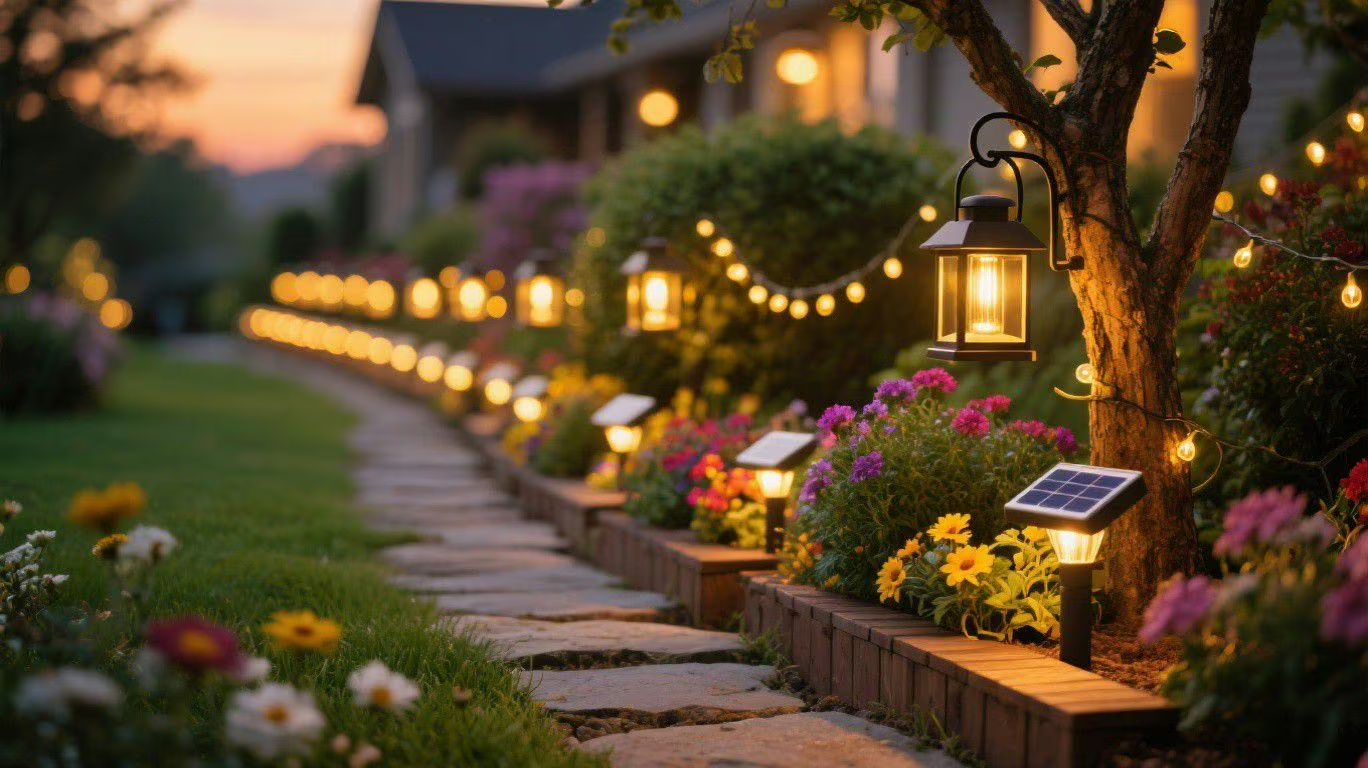
One decor strand charges itself on the shed roof all afternoon. The other runs on a drawer full of AA cells and good intentions. By the second week of December, those two approaches to winter decor have very different personalities, and if you are outfitting a porch post, a mailbox garland, or a window box this season, it helps to know which personality you are buying before the first cold snap hits.
How Winter Changes the Math for Both
Solar decor lights get one big change to their job description in winter: the charging shift shrinks. By mid-December much of the country sees roughly nine hours of daylight, and the sun sits low, so a panel that filled up by two in the afternoon back in July now collects a fraction of that energy. Tilt panels steeper than you would in summer if the fixture allows it. Battery lights ignore the sun entirely. Their weakness is elsewhere: you are the utility company now, and cold weather raises your rates.
Brightness: The Slow Fade Versus the Cliff
Here is the honest difference nobody mentions at the store. A solar strand fades gradually. A cloudy Tuesday means a dimmer Wednesday, and after a stormy week the last hour of the evening gets sketchy. Battery lights run at full brightness right up until they do not, then drop fast, usually mid-party. Some people prefer the fade because it telegraphs what is coming. Others find it moody. Both reads are fair.
The real-world fix on the solar side is expectation, not hardware. If a display only has to look good from seven to ten, most winters cooperate. If it has to carry a party until midnight in February, plan on battery backup, or fewer and larger fixtures doing the work.
Cold Chemistry Picks Its Own Winners
Cold is hard on both systems, just in different ways. Plain alkaline cells lose a lot of their punch below freezing, which is why battery decor often dims on the coldest nights, precisely when you wanted it most. Solar fixtures usually run NiMH cells, which also slump in the cold, while lithium-based cells hold their voltage better. When a solar set stops holding a charge, it is usually the battery and not the light, and replacing the cells is a ten-minute job once you know the routine.
What a Season Actually Costs
Run the numbers as estimates, not gospel. A battery strand that eats three AA swaps a season, at a few dollars per set of decent cells, costs roughly ten to fifteen dollars a year, forever. Now say you run four strands across a porch and two fence posts. That is a pack of batteries every few weeks from Thanksgiving through February, and those small trips add up to a real line on the winter budget.
A solar strand costs its purchase price once, then maybe one set of replacement cells every second or third winter. For small displays the five-year totals land surprisingly close. For larger ones solar pulls ahead, because panels scale free and the battery drawer does not.
Where Each One Wins
- Choose battery decor for covered spots with zero sun: deep porches, wreaths under the eaves, north-facing window frames.
- Choose solar for anything in the open: fence lines, mailbox garlands, bed borders, rail runs.
- Choose battery when one specific night has to be bright, like a party or a family gathering.
- Choose solar when nobody in the house wants to remember to buy cells in January.
For open fence runs my pick is solar string lights: set once in November, ignored until spring. For the covered porch rail I still run battery, decorative string lights on a cheap timer, with cells swapped twice a season.
The Six-Week Verdict
December through early February is where the decision gets made. Solar dims during storm weeks and bounces back on the first clear day, and it never costs another cent to run. Battery holds its brightness with total indifference to the weather, and quietly bills you for the privilege. My own split is about eighty-twenty: solar everywhere the sky can see, battery only where the roof gets in the way.
One last mention for the hybrids. A growing number of decor lights charge by USB and run like battery units, which makes them a good January compromise. Solar habits in December, plug-in rescue in February, and no AA drawer required.