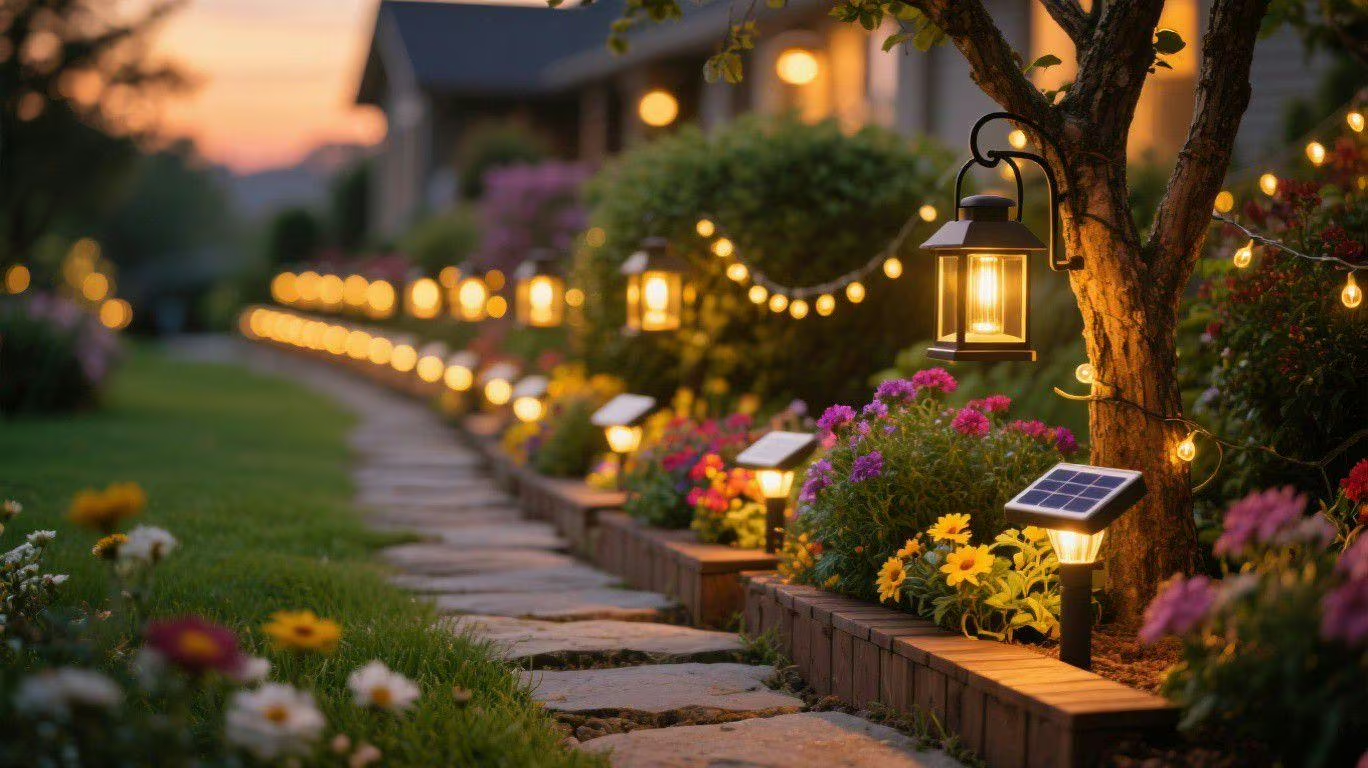
The set by my side gate went into the ground glossy black. Three summers later the housings had faded to a chalky gray that read, at dusk, like leftover PVC pipe. I priced a replacement set online, then instead I spent one afternoon and about half a can of spray paint, and those old housings came out looking better than the photos of the new ones I had been about to buy. They are still out there, two repaints later, holding color through everything a Midwest year does.
Plastic fades because ultraviolet light beats the pigment out of it, and the cheaper the housing, the faster it happens. To paint solar light fixtures so the finish survives outdoors, the prep matters far more than the paint, and the masking matters more than both. Here is the sequence that worked for me, including the mistakes I made the first time.
Prep Is the Whole Job
Take the fixtures apart as far as they come: head off the stake, battery out, lens out if it releases. Wash every housing in warm water with a drop of dish soap or a degreaser, because sunscreen, pollen films, and years of general grime will lift paint right off if you spray over them. Once dry, scuff the surface with fine sandpaper or a gray scrub pad, just enough to kill the shine everywhere, then wipe the dust off with a tack cloth or a barely damp rag. My first attempt skipped the scuffing on two of six housings, and those two were peeling by spring while the scuffed four held for years. There is your control group.
Pick the day with the same care. Spray paint wants warmth and dryness, a mild fall afternoon rather than the first cold snap, and full cure takes a day or two before fixtures go back outside. Heads reassembled damp are the ones that fog their lenses from the inside all winter, so patience is part of the repair.
Use Paint Made for Plastic, and Mask Ruthlessly
Use a spray paint formulated to bond to plastic without a primer; the fusion-style products sold for patio furniture and mailboxes are the category. Then mask everything that must stay clear: the solar panel, the light sensor, the LED lens, any switch, and every seam where parts reassemble. Newspaper and painter’s tape do the job, and overspray on a panel costs you far more in lost charging than the paint costs in dollars. Spray several light coats rather than one heavy one, from about eight to ten inches, letting each coat tack up before the next. Light coats are what keep the finish from running and from pooling at the seams.
Matte Beats Gloss Outdoors
Finish choice is not just aesthetic. A matte surface hides dust, water spots, and the fine scratching a yard delivers, while gloss magnifies every one of them and shows sun fade again sooner. Matte black also blends scuffs into itself, which matters when a hedge trimmer grazes a housing every June. Expect to repaint roughly every two to three years, when the chalkiness returns; it is an afternoon, not a project, and the fixtures you repaint are fixtures you are not shipping to a landfill. Black is the safe choice because every set eventually reads black anyway, though bronze and oil-rubbed finishes age just as well and hide dust better under warm LEDs.
One Color Unifies a Mismatched Set
The repaint is also your chance to fix the mismatched set, the ones accumulated from gifts and clearances that never matched. One coat of one color unifies a mixed group instantly, though if the units differ in color temperature or height, matching specs comes first and our guide to matching mismatched solar sets sorts that part out.
One honest note on worth: cheap budget path light six-packs are borderline candidates, since a new set costs about what the paint does, and I would only repaint them for the environmental math or the perfect existing layout. Heavier garden fixtures with substantial housings absolutely justify the afternoon. Whichever you choose, paint one fixture first and live with it a week. If the finish and color pass that test, paint the rest, and the set gets years it would not otherwise have had. Label the can while you are at it; two years from now, the color code on the lid saves the whole matching argument.