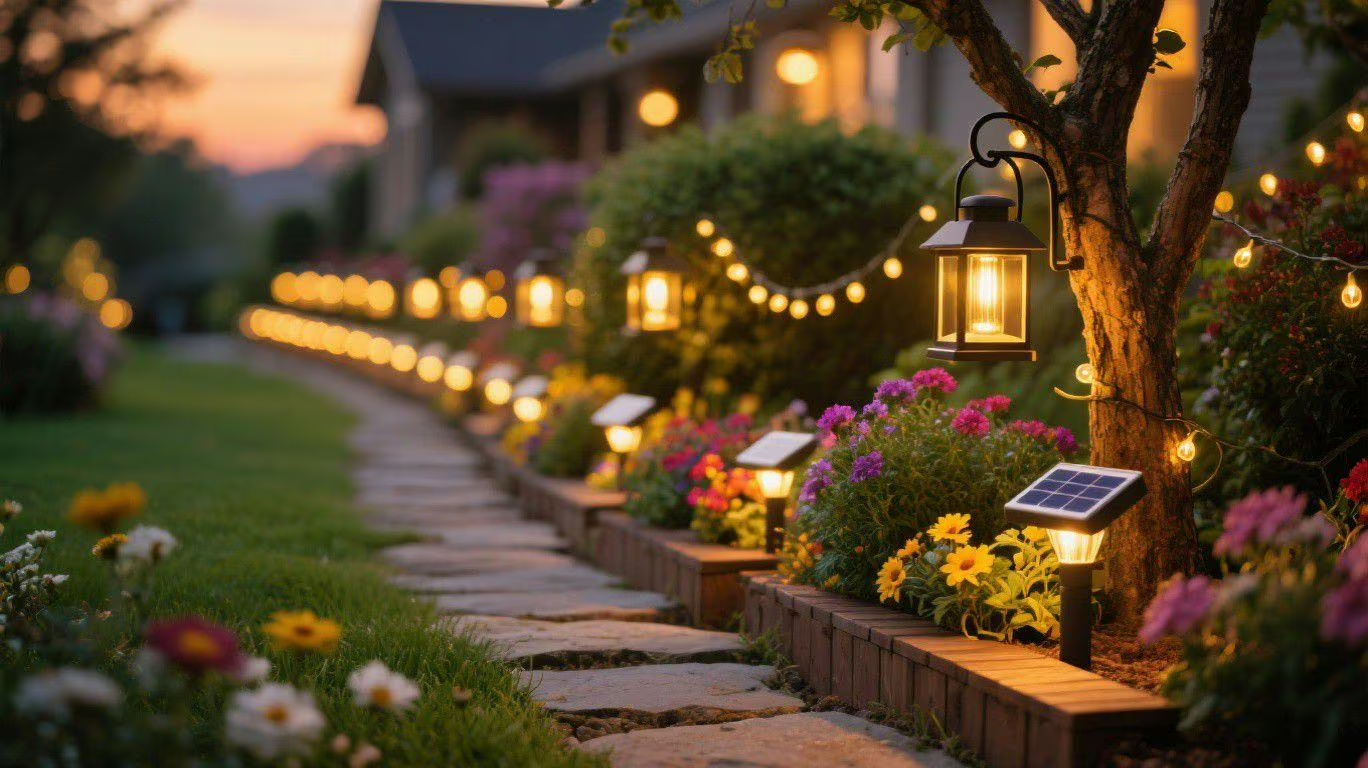
A home emergency lighting kit is not a flashlight in a junk drawer. It is a small, known, working collection of lights you could find in the dark in under a minute, with batteries that are charged and a plan for who grabs what. Most households do not have one, and the cheapest way to build one is sitting outside right now, because the solar fixtures in your yard are pre-charged, flame-free, and completely indifferent to whether the grid is up.
The timing is not abstract. Winter storm season runs November through February, and the storms that take out power most often are the October ice events and the wet, heavy November snows that snap limbs onto lines, not the picturesque January kind. When the power fails at 6 p.m. in a storm, the house goes dark and so does the entire yard, and every solar fixture out there keeps right on working on the charge it banked that afternoon. An emergency lighting plan built around that fact costs very little and asks almost nothing once it is set up.
Why Solar Fixtures Earn a Spot in the Kit
Flashlights are great until the third night of an outage, when the batteries in the junk drawer turn out to have been junk since 2019. Candles are a fire on every surface of a house being navigated by children and a dog. Solar fixtures solve both problems: they recharge themselves every daylight hour, they run cool with no open flame, and they throw the kind of soft area light a room actually needs, rather than a tight flashlight circle that everyone crowds into.
They also solve the indoor-outdoor problem. The same fixture that lights a path in July is a bedside lamp, hallway marker, or bathroom night light in a February outage, and it does this with no wiring, no fuel, and no noise. We cover the mechanics of using yard lights indoors during an outage in our power outage walkthrough; the rest of this piece is about the kit logic around that trick, so the lights are charged, findable, and rotated before the storm rather than scavenged during it.
Scale the kit to the household. Two people need the tray and the string; a family wants a fixture per bedroom doorway so children can find the bathroom without waking anyone; a house with an older relative should add light on the hallway between bed and bath, because the outage hours nobody plans for are the ones with the most falls.
Which Fixtures to Draft First
Not every solar fixture is useful indoors. The best emergency draft picks are the soft, wide-glow types: garden stake lights brought inside by the handful make excellent area lights, standing on counters and tables, and a tray of four or five will keep a kitchen functional through dinner and cleanup. Their panels can even be propped in a bright window to trickle-charge during the day, storm clouds permitting.
Second pick, a strand of solar string lights, is the underrated one. Laid along a baseboard or draped across a headboard, one strand marks an entire hallway or bedroom with enough light to move by and almost no glare, and children treat them as a feature rather than a crisis. Skip the floodlights and spot lights for indoor duty; their narrow, punchy beams are for trees and driveways, and indoors they just blind everyone in the room.
The Rotation: Keeping Kit Lights Charged
Here is the part most kits get wrong. Solar lights need daylight, so a kit that sits in a bin for two years is a bin of dead batteries, not an emergency plan. The fix is rotation: the drafted fixtures live in the yard doing their normal jobs, and they get pulled into the kit when a storm is forecast, or on a simple schedule, checked monthly and swapped seasonally. They charge themselves as long as they stay outside; the kit is a plan and a bin, not a collection of hostages.
Storage temperature matters more than people expect. A cold garage is where charge goes to die, since batteries lose capacity in the cold and the self-discharge quietly continues anyway. Store spares and anything staged indoors in a closet or under a bed, at house temperature, with the switches off. If your only option is the garage, accept that those fixtures will need a day of sun before they are useful, and rotate them into the yard to get it.
What Actually Goes in the Bin
The kit itself is one container, in one known place, holding:
- Four to six garden-style fixtures, rotated through outdoor duty so they hold charge.
- One string of solar fairy lights for hallways and bedrooms.
- Spare rechargeable batteries in the sizes your fixtures use, plus a note of which is which.
- A damp cloth or wipes, because a dusty panel is a half-charged panel.
- A written card: where the fixtures came from in the yard, and where they go back.
That last item sounds fussy until the power returns and six fixtures have no home. Write the map while the lights are still in the ground and the system closes its own loop.
The November Check-In
Anchor the whole routine to the clock change, because daylight saving time ends on the first Sunday of November and you are already being told to check your smoke alarm batteries. Add two items: walk the yard at dusk and note any fixture dimming before ten, and stage the bin. Swap batteries in the tired ones, wipe every panel, and confirm the kit sits where you could find it blind, in the dark, in a hallway you have never lit. That is the entire commitment, one hour a year, in exchange for a house that stays human-sized after sunset no matter what the weather does to the grid. Then the bin goes back where the yard lights found it, and the system runs itself until spring.