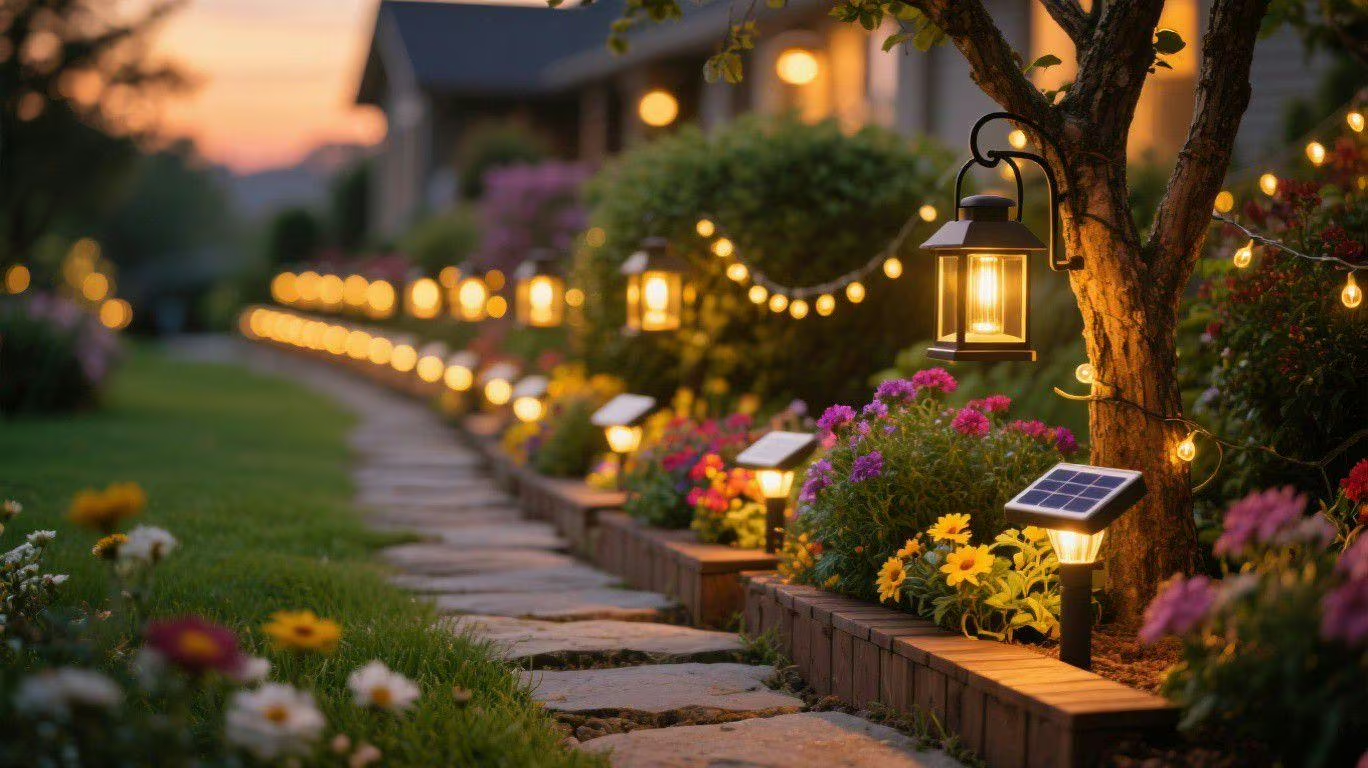
I learned outdoor dining lighting from a restaurant, not a magazine. The place had six tables under strings of warm bulbs, and you could read the menu, see who you were talking to, and never once squint. Most backyard setups fail one of those three tests, usually by putting one big light far above the table and hoping. Here’s the standard I use now: light the table, not the people, and call it done.
Outdoor Dining Lighting Starts With the Table, Not the Lights
Think about what actually happens at an outdoor table after dark. People find their glass, cut their food, watch faces, and take one photo they’ll regret. All of that needs modest, even light at the surface, roughly what a decent candlelit restaurant gives you, not what a porch flood gives you. In practice that means warm white around 2700-3000K, low lumen counts, and the source close enough to matter. A bulb twenty feet up lighting a table is doing almost nothing; a string seven feet up over the same table is doing everything.
Height and the Glare Line
Glare is a geometry problem. If a bare bulb sits at seated eye level or within a few feet above it, everybody at the table stares into it all night. Too high and the light stops reaching the plates. The sweet spot for strings over a dining area is around seven to eight feet off the ground, so the bulbs clear standing heads but stay low enough to throw useful light down. For a single pendant or lantern over a table, aim for about five and a half to six and a half feet above the floor, and use a warm, diffused source rather than a bare lens. Sit in the chair and look around. If you see the bulb, raise it, shield it, or dim it.
Three Tables, Three Setups
Long rectangular table
Two parallel strings run above the long edges of the table, about a foot outside the edge on each side. That lights both place settings and leaves the center conversation sightline clear of bare bulbs. One string down the center works too, but mount it high enough that nobody at the ends stares down the wire of lights.
Round table
One centered source, full stop. A single lantern or pendant over the middle covers a four-to-six person round table, and adding more fixtures around it just creates competing shadows and reflections in the glasses. If the round table lives under a bigger string layout, let the strings light the room and give the table its own warm center.
Bar or counter height
Seating is higher, so glare arrives sooner. Run a string along the counter at counter-plus-two-feet and keep the bulbs lower output, or use a row of small lanterns instead. Bars tolerate dimmer, moodier light than dinner tables because nobody’s cutting a steak, and dim light at a counter is the restaurant patio look people are trying to copy anyway.
Warm Light Makes the Food Worth the Trip Outside
Color does real work at a dinner table. Cool white light flattens reds and browns, and a medium-rare burger under 6500K looks gray and slightly guilty. Warm light makes the same plate look the way food does in your memory, and it flatters faces, which matters when you’re sitting two feet from people for two hours. If you want the fuller version, I ran through how solar lights score on color accuracy, and the takeaway for a dinner party is simple: buy warm, and buy one batch so the whole table matches.
About the Bugs
Every dinner party outside has a sixth guest with wings. Insects key in hardest on the short-wavelength end of light, the blue and UV range, which is why a cool-white bulb collects a cloud and a warm amber one mostly doesn’t. Warm light won’t make you bug-free, and the honest answer for a serious mosquito problem is a fan, since they’re weak fliers and a steady breeze across the table clears it better than any bulb choice. But warm LEDs at least aren’t advertising, and that’s usually enough for spring and fall dinners.
The End-of-Night Routine
- Drop the strings to their dimmest setting, or switch them off, once plates are cleared. Darkness cues the evening’s end without anyone announcing it.
- Leave the tabletop lanterns on. They mark the table, light the last coffee, and walk people to their keys.
- Let a motion light handle the path to the gate or driveway, so the last two guests leave under light that wasn’t burning all night.
- Trust the solar part to finish the job. A solar string or lantern fades out on its own schedule, which means you can go to bed and the party genuinely ends itself.
If you’re building toward restaurant style patio lighting on a real budget, start with one solar string and two tabletop lanterns and eat outside once before adding anything else. Dinner will tell you what’s missing, and it’s almost never more lumens.