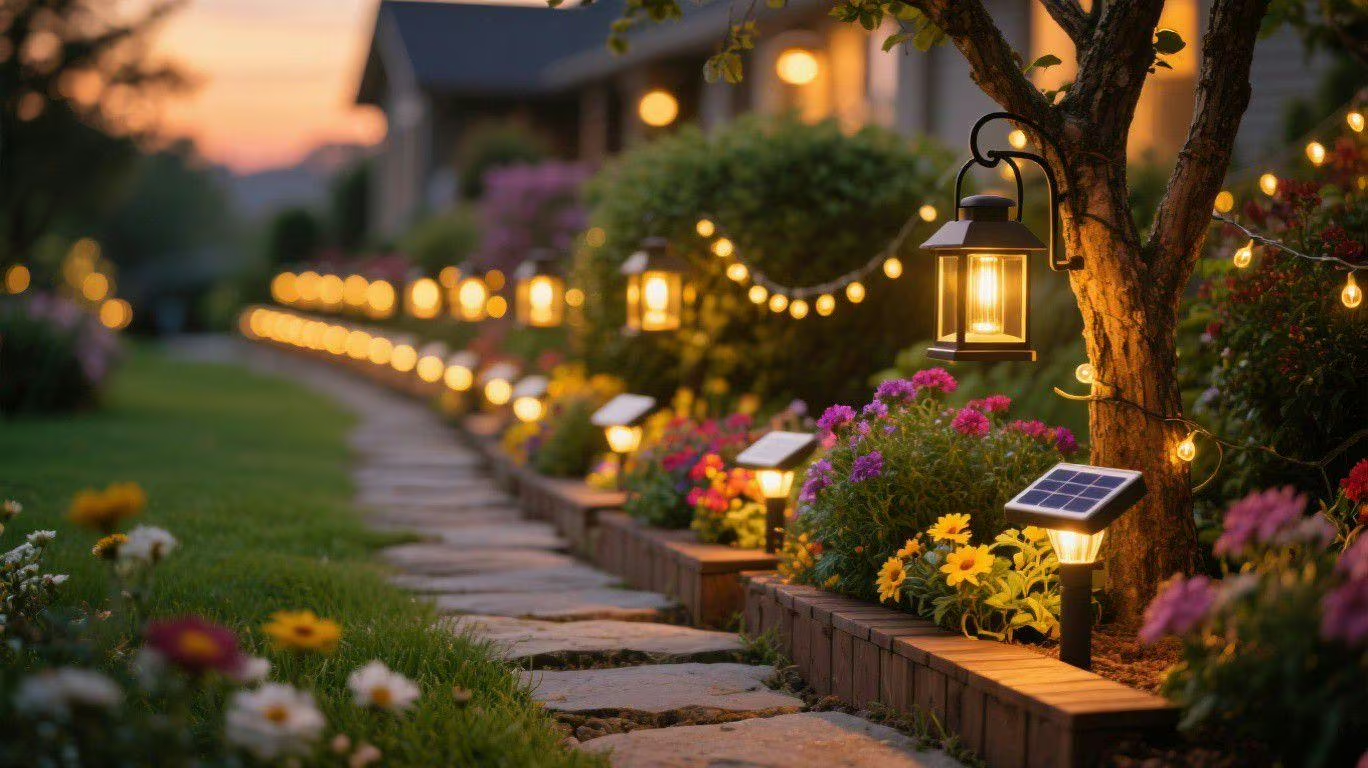
Somewhere around the third week of September, the porch changes jobs. All summer it was a place you walked through. Now it’s where you sit with a drink and a blanket while the grill cools, and the lighting that worked fine in July, one sad builder-grade bulb over the door, suddenly isn’t enough. Most fall porch lighting ideas are really pumpkin photos with a candle added in post. What actually works is the same thing that works indoors: layers, and a plan for the fact that dark arrives earlier every week.
Fall Porch Lighting Ideas Work in Three Layers
- Task light. The fixture by the door itself. Keys, packages, wet steps, the deadbolt at 9 p.m. This is the one layer that has a real job, and in fall it works overtime.
- Ambient light. Strings and lanterns, the stuff that makes the porch feel like a room instead of a landing. Dimmer than the task layer, warmer, and closer to where people sit.
- Seasonal light. Small, low lights tucked into the October decor, pumpkins, mums, hay bales. Purely for mood, easily swapped, and the only layer that should change month to month.
The Task Layer Works Overtime in Fall
By late October, dusk in much of the country lands before dinner, and the light by your door goes from accent to workhorse. It’s the first thing that greets you with arms full of groceries and the last thing between you and an icy step. Aim for warm white around 2700-3000K, mounted at head height on the latch side of the door, with enough throw to reach the top step. A dusk-to-dawn or motion version earns its keep here, and a fixture like the tungsten wall light with motion sensor handles the whole job on a solar charge: full brightness when someone walks up, soft standby glow the rest of the night.
Ambient: One String and a Couple of Lanterns
You don’t need much. A single string of solar fairy lights swagged along the porch roofline or railing does more for the space than anything else you can buy, because it puts soft light exactly where people sit instead of eight feet above their heads. Below that, two or three tabletop lanterns on the steps and side table add depth and give you movable light you can carry to a chair. I compared styles of solar tabletop lanterns last season, and the short version is that matte metal finishes disappear against fall decor while glass panels read as flicker and warmth from the street. Cluster lanterns at different heights, don’t line them up like a display case. And a scale note for small porches: a five-foot-deep porch wants one string and two lanterns, not four fixtures and a wreath with lights in it. Layering fails when each layer is too big for the room, so buy the smallest version of each layer that still does its job and the porch feels furnished instead of dressed.
Real Pumpkins and Real Candles, or LED?
My rule after one too many windy October nights: real pumpkins, fake flame. A lit candle inside a carved pumpkin needs babysitting, dies in the first breeze, and lives next to dried cornstalks and a doormat, which is a combination I no longer trust. An LED tealight inside a real carved pumpkin gives you ninety percent of the look with none of the watching. Uncarved pumpkins and gourds don’t need internal light at all, just a warm lantern set beside the pile, low, aimed at the stems. Keep every bulb in the scene warm, because warm light and fall color share a palette, and one cool-white bulb will make mums look like they’re in a gas station cooler.
One Setup, Two Holidays
The trick to October porch decor that doesn’t burn you out is keeping the layers separate. Halloween lives almost entirely in the seasonal layer: webs, skeletons, the light-up house number wearing a costume. When November 1 arrives, pull that layer off, and the task light, the string, and the lanterns are still there doing their jobs, which is a complete Thanksgiving porch the moment you add a few more pumpkins and a wreath. Warm and slightly dim suits late November better anyway, since darkness now starts at five and nobody wants a glaring porch in a season about slowing down.
Start this weekend with the two fixed layers, the door light and the string, and add the seasonal stuff whenever the first pumpkins show up at the farm stand. That order matters: build the room first, decorate it second. If you’re also dressing the whole yard for the season, my Halloween lighting setups run on the same layered logic, just louder.