Two jobs cheap solar lights do well, two they fumble, one they should never be given at any price. That is the entire honest hierarchy of the under-$20 fixture, and it took me about three batches of bargain lights to learn it properly.
I buy cheap solar lights on purpose. They have a real role in a yard. They also have a ceiling, and pretending the ceiling is not there is how people end up with a dark back step in February. Here is the honest tiering, from someone who keeps both kinds running.
What a $13 to $19 Fixture Does Fine
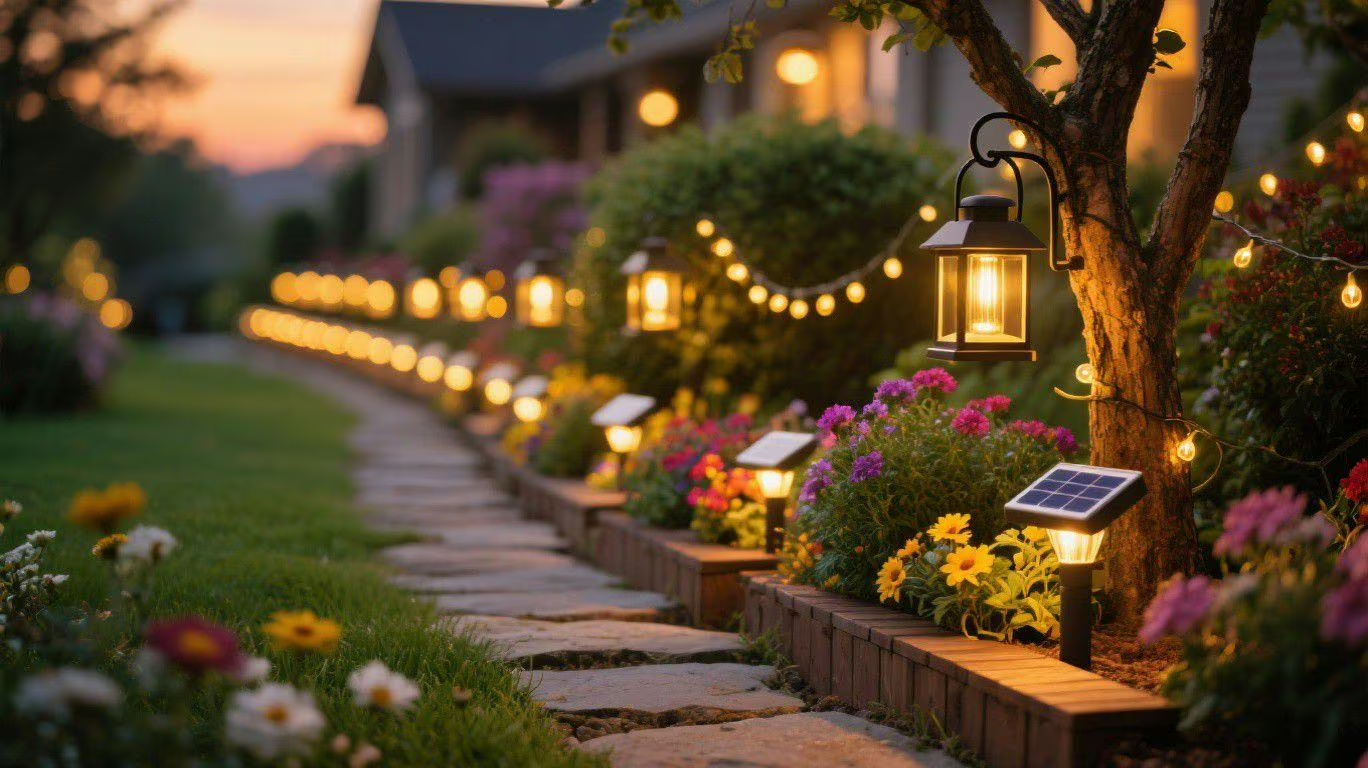
Decorative glow is home turf. A set of inexpensive stake lights turning a flower bed into a soft constellation, a run of decorative string lights on the patio rail, a little color piece in a planter: this is where cheap wins outright, because the job is mood, not precision. Low-traffic paths are fair game too. A walk you use at a stroll, where a missed marker is an annoyance rather than a hazard, does not need premium hardware. Balconies and small patios belong in this tier as well, since the runs are short and the stakes are low. By my count, most of my decorative fixtures live in this bracket, and most of them earn their keep every summer.
Where Cheap Disappoints by February
Winter runtime is the first giveaway. Small panels and small cells that look generous in June are running on fumes around the solstice, glowing for a couple of dim hours after a short gray day. Motion range is second: budget sensors claim long detection distances and deliver a bubble roughly the size of a picnic blanket. Longevity is third, with thin stakes, glue-together housings, and gaskets that were more suggestion than seal. None of this is a scandal. It is the physics and the price point agreeing with each other.
Our path light brightness comparison shows the seasonal gap plainly. The difference between an inexpensive set and a better one in July is a shrug. The same difference in December is the gap between marked edges and guessing.
When Buying Cheap Is the Smart Move
Mass decoration tops the list: twenty stake lights across a wide bed, holiday strings, party lighting you will use four nights a year. Rentals and temporary homes, where you do not want to leave a premium setup behind. Experimentation, when you want to learn where light belongs in your yard before committing real money to the permanent version. In all three cases the cheap fixture is not a compromise. It is the correct tool, and buying up would be the actual mistake.
Gift-giving belongs on the smart list too. An inexpensive set of stake lights or a string makes a good present precisely because it is low-risk: if it lands with someone who never thinks about lighting, they lose nothing, and if it sparks a hobby, you get credit for starting it. Premium fixtures as gifts only make sense when you already know the yard they are going into.
When It Is False Economy
Anything that is the only light between a person and a fall. The single step down to the side door, the walk your mother-in-law uses after dark, the driveway edge where you back out at six in the morning: these are one-fixture jobs that deserve the good fixture, because the price gap between bargain and solid is smaller than one copay. I would also skip cheap as a sole security light. A dim sensor bulb that triggers late reads as decoration, not deterrent.
Watch the entry math specifically. A budget fixture at the front door gets triggered dozens of times a night by every car and passing cat, and its small cell drains fastest exactly where you need it most. The door is the one location where spending up pays you back weekly.
The Middle Path: Spend Where It Counts
The yards that look best and work best are rarely all-budget or all-premium. The pattern I keep landing on: good fixtures at the door and on any step, basic sets everywhere else, decorative pieces wherever the mood strikes. Put the money at the touchpoints, the entry, the stairs, the gate latch, and let the inexpensive sets fill the middle distance where nobody is walking blind.
There is a maintenance angle too. The good fixtures at the touchpoints get cleaned and checked each fall because they matter, while the cheap fill-ins are allowed to fail quietly. Knowing which category a light belongs to tells you exactly where your attention goes this season, and where it does not.
So before the next sale, sort your lighting wish list into two columns: glow jobs and safety jobs. Buy cheap for the glow, spend real money for the safety, and skip the middle, because that is where overpayment hides. February is the month that tells the truth about every solar light you own, and it has opinions about this arrangement. Mine has never once proved it wrong.