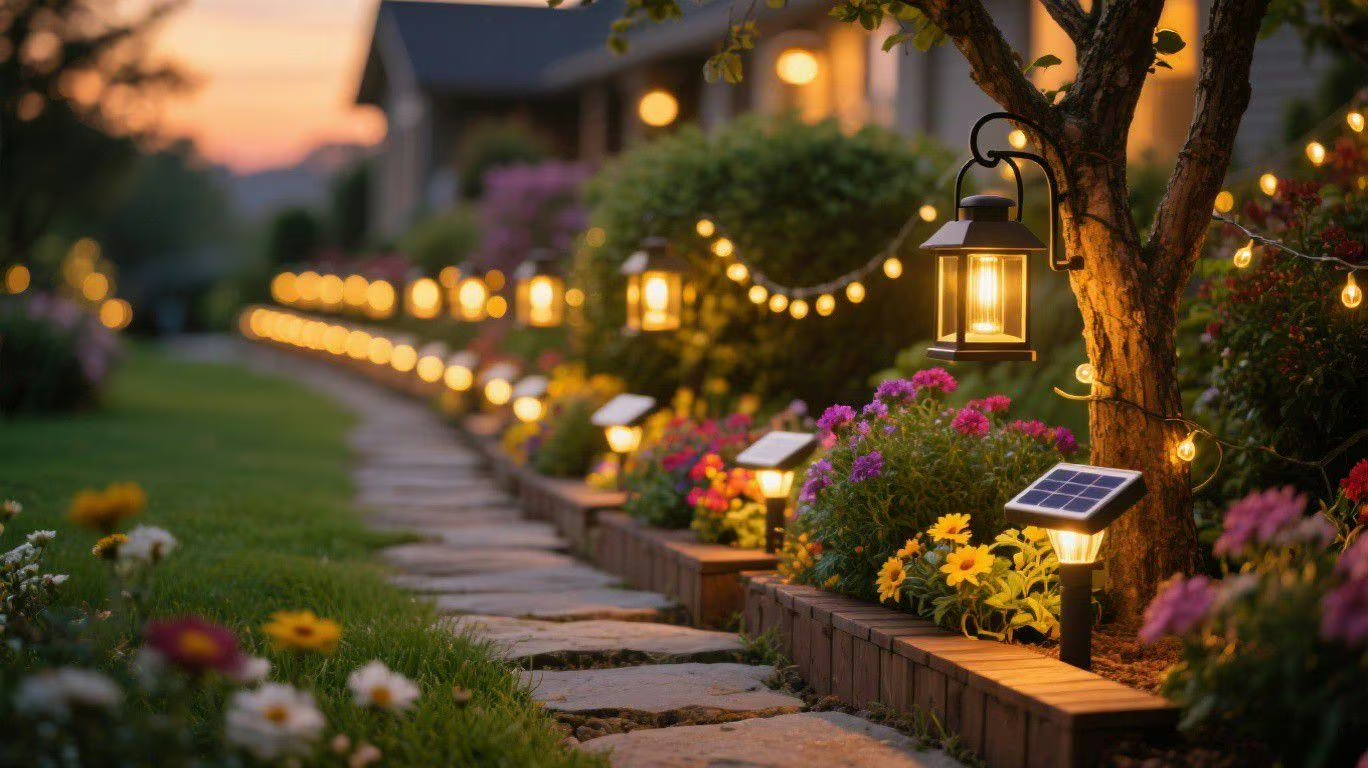
Before you click buy on that big multipack because the per-unit math looks unbeatable, hear the warning first: the most expensive solar lights I have ever owned were the ones I bought too many of. Twenty-four fixtures for a path that needed twelve is not a bargain. It is a storage problem wearing a savings badge.
Pack size is where the real money hides in solar lighting. Per-unit prices do not slide down smoothly as counts go up; they drop in cliffs, and knowing where the cliffs are turns an impulse buy into a plan. Here is the solar light multipack math I run before any order.
The Price Cliffs at 6, 8, and 12
Six-packs are the impulse tier. Eight-packs sit a little lower per fixture. Twelve is usually where the floor lives: the per-unit price often drops hard from six to twelve, then flattens, and past that you are mostly paying the same rate for more boxes to store. When I compare sets, I divide price by fixtures and ask which run the box is actually for, because a cheap twelve for a short path is still money left on the table.
Watch the per-fixture battery math too. Some budget twelve-packs ship with smaller cells to hit a price point, so the per-unit cost that looked great buys a fixture holding less energy than the six-pack next to it on the page. Capacity on the label is part of the math, not a footnote to it.
The second cliff is quality, not count. A premium multipack costs more per box but usually carries bigger panels and real replaceable batteries, which is the difference that shows up in January. If your walk faces north or your winters run long, spend up on the stretch you use nightly and save on the stretches you barely see.
Count Coverage Before You Count Savings
Measure the actual route before opening a single listing. Comfortable spacing for path lights runs roughly six to eight feet, tighter on curves and steps, wider on a straight run where you only need to mark the line. Count corners, gates, and the spot where the path meets the driveway, because each of those deserves its own fixture rather than whatever is left over in the box. Sketch it if it helps: a rough map with dots for fixtures, arrows for walking routes, and a star at the front door settles most count arguments in five minutes. A basic set of solar pathway lights covers the long utility stretch fine; the premium set earns its price at the entry, where visitors actually look down.
The Spare-Two Rule
Whatever number you land on, add two. Stakes snap in the first hard frost, a housing cracks under a snow shovel, and one unit always turns out to sit in the sprinkler’s worst arc. Two spares in a garage box cost almost nothing at multipack pricing, and they turn a dead light into a five-minute swap instead of a matching problem two years from now, when the finish has changed and the exact model is gone. My rule of thumb after too many seasons: buy the set you would still be happy with if two of them died in year one, because two of them will. The two spares also cover the fixture you inevitably give away, because someone always asks.
The Mixed-Set Strategy for Yards That Are Not One Line
Most yards are not one long path, yet the mega-pack treats them like they are, and the result is usually an underlit front walk and an overlit flower bed. What works better is mixing: one solid basic set for the utility stretch, a smaller premium set for the entry, and decorative pieces only where the goal is mood. Three small orders beat one giant one when the giant one is wrong for two-thirds of the property, and the yard ends up looking intentional instead of uniform.
One honest note about mixing: finish and color temperature are where mismatched batches show their seams. Keep every fixture on a single visible run in the same family, warm with warm, and save the mixing for runs that never see each other. Nobody notices two different fixtures on opposite sides of the house. Everybody notices two different whites on the same four feet of sidewalk.
Tonight, walk your path with the notes app, mark every spot that deserves a fixture, and add two. Then shop the pack that matches that number, not the one with the biggest discount sticker on the corner. The box count should come from your yard, never the other way around.