The first Monday after the clocks fell back, I stood at the end of my driveway at 6:40 in the morning and watched my neighbor’s kid start his walk to the bus stop. Until he reached the corner streetlight, he was mostly a silhouette. From our porch to that corner is about two hundred feet of sidewalk, and last winter almost none of it was lit.
Daylight saving time ended on the first of November, and it will not give those mornings back until spring. If your kids catch the bus, the school walk is now a winter lighting project whether you planned for it or not. Here is what I learned lighting our own route to the corner, including the part where the neighbors finally chipped in.
Walk the Route Yourself Before You Buy Anything
Do it at the actual departure time, in actual darkness, once in early November. Take your phone and note where you instinctively slow down: the lip of the driveway, the gap between two houses where the sidewalk jogs, the stretch with no porch light at all. Those spots are the map. Lighting bought from the couch covers the middle of the yard; lighting bought from a 6:40 a.m. walk covers the places people actually stumble.
Count the dark gaps too, not just the dim ones. A gap of more than a few strides on a route a child walks every single day is the priority; mood lighting in the flower bed can wait for spring.
Light the Edge of the Path, Not the Middle
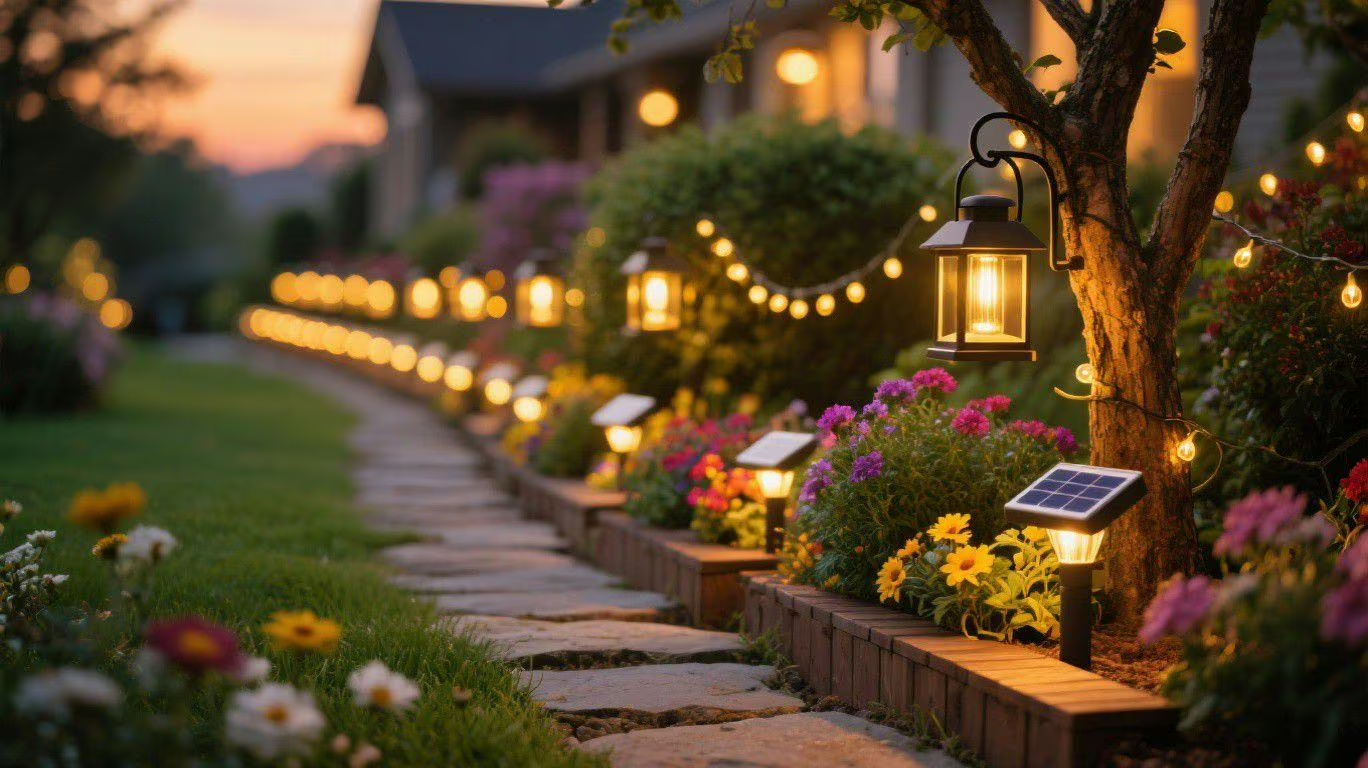
Kids walk lines and drivers scan edges, and a row of low solar pathway lights along the grass does both jobs at once: it shows your child where the sidewalk goes, and it shows a driver where a small person might appear. You are not trying to read a book out there. A soft marker every six to eight feet is plenty, and the flat stake styles survive backpacks, sleds, and snow shovels better than anything ornate.
One spot deserves its own fixture: wherever the route meets the road. A single brighter light at the curb line, even a modest one, marks the crossing point. That is the place a driver rounding the corner at a quarter to seven needs to know about before a kid in a dark coat steps off the curb.
Make the Kid Visible, Not Just the Path
A lit path does not make a first grader in a navy puffer visible; that job belongs to reflectives. A few dollars of reflective tape on the backpack, a zipper pull, or a hanging tag at the bus-stop sign does more for visibility than any fixture can. Walk the route once with your own car headlights sweeping across it and the point makes itself.
Keep the house end lit too. Solar step lights on the front stairs mean the last surface your child crosses is a defined edge, not a shadow with a drop, and a porch light left on its dusk sensor guarantees the walk starts bright no matter how the morning goes.
The Corner Deal: Splitting Coverage With Neighbors
The last stretch to a bus stop usually crosses three or four front yards, and the corner house owns the actual stop. Knock on doors in October, not December; people are far more generous before the holidays eat their budgets. The pitch that worked on our street was simple: each house lights its own frontage, and the corner house gets the brightest fixture because every kid on the block stands there in the dark. Total cost per family came out around the price of a pizza, and the whole route went from cave to clearly marked in one weekend.
If a neighbor is not interested, let it go. One dark gap is survivable. A grudge with the corner house is not, and you can always double up fixtures on your own frontage instead.
So this weekend, set an alarm for the real departure time and walk the route once with your kid. Five minutes in, you will know where the holes are, and a couple of stake lights, one curb-side marker, and some reflective tape will close most of them before the next cold snap. If the corner of your block stays dark, that pizza-math conversation with the neighbors is worth having now, before December schedules make everyone impossible to reach.