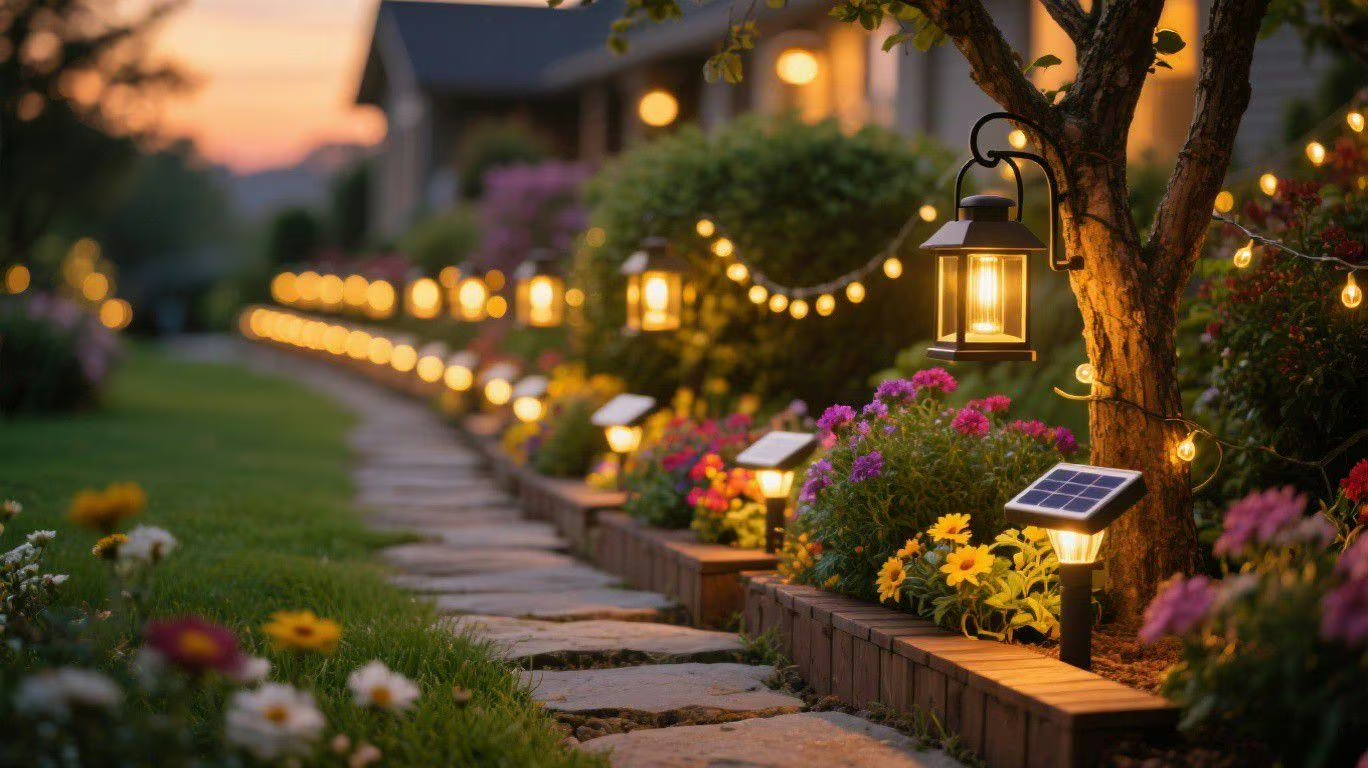
The myth is that early darkness is a December problem. It is not. Clocks fall back on Sunday, November 1, and the very next week the sun is setting before five across most of the country. By the second week of December, dusk lands closer to 4:15 in the northern states. The darkest stretch of the year is not the three weeks around the solstice; it is thirteen weeks, November through January, when dinner time is night time and the dog needs walking at the exact hour the yard is blackest.
Outdoor lighting for dark afternoons is therefore a seasonal planning problem, not a decorating one. The yards that feel right in January are the ones where somebody sat down in early November, mapped what actually happens outside after 4:30, and lit those routes and tasks first. The twinkle came later. Here is how to run that audit in one weekend.
Map the Yard by What You Do After Dark
Forget how the yard looks and list how it is used between dusk and bedtime. For most households the list is shorter than expected:
- The arrival: car to door, arms full, most weeknights.
- The trash run: garage to curb and back, once a week, in whatever weather.
- The dog loop: back door to fence corners to gate, multiple times daily.
- The package grab: front porch, several times a day in December.
- The kid zone or the smoking corner or the hot tub, whatever your household actually does.
Those five routes are the entire lighting plan. Everything else in the yard, the uplit tree, the glowing shepherd’s hook, the string over the patio, is ambience, and ambience is what you add after the routes work. Walk each route once after dark with your phone flashlight off, and note where you slow down, where you step carefully, and where the porch light gives up.
Light the Task Zones Before the Decorations
Start with the arrival, because every household uses it and visitors judge by it. A bright, dependable source at the door plus an even, low run of solar path lights along the walk solves arrival lighting for less than one urgent-care copay. The goal is boringly consistent: every step edge visible from the car, no pools of glare, no dark gap between the driveway and the door.
The utility zones get the same unsentimental treatment. Motion-activated solar wall lights on the garage and by the back door cover the trash run and the dog loop without burning charge all evening, which matters more than it sounds in December. A light at the side gate latch sounds like a luxury until the hundredth time someone carries recycling through it in the dark.
One more note on the door fixture: aim it at the lock side of the door and slightly downward, so the person with full hands gets light on the keyhole instead of a shadow of their own head. It is a two-minute adjustment that every December visitor benefits from.
Plan for Solar’s Worst Quarter
The same thirteen weeks that demand the most of your lighting are the weeks solar fixtures have the least to give. Short days, low sun, and cold batteries cut runtimes by a third to half for many fixtures, so the planning move is concentration: fewer fixtures doing more work, placed where the winter sun actually reaches, with fresh batteries before Thanksgiving. If you want the full picture of what changes in winter and what does not, our piece on whether solar lights work in winter is the honest baseline.
Two practical rules carry the season. Motion mode on fixtures near routes stretches a weak December charge across the whole evening, waking only for traffic. And the lights you truly depend on, the door, the steps, the gate, get the sunny spots in the yard, while the decorative mid-yard fixtures accept the leftovers. December is triage; admit it and the yard works.
The Zones Nobody Plans Until Someone Falls
Every yard has corners where the dark season hides specific hazards. The trash can pad, where wheels miss the pavement edge. The three steps down to the side yard, invisible under leaf litter. The mailbox at the curb, visited in gloves and darkness. The patch of ice that forms in the same spot every January because the downspout dumps there. Each of these wants one small, dedicated light, not a brighter yard overall, and each is a ten-minute install.
The latch rule is worth its own sentence: anywhere a gate, a shed, or a bin has a latch, put light on the latch specifically, not the door in general. Fumbling a frozen latch in the dark is the moment people decide their yard lighting has failed, even when the rest of it photographs beautifully.
December adds one task the old list never had: the package on the porch. A porch that glows from dusk to bedtime looks occupied and watched, which is a quiet deterrent in itself, and the doorbell camera you already own works considerably better with light on the step than without it.
One November Weekend, In Order
Saturday is the audit: walk the five routes after dark, take notes, and buy nothing yet. Sunday is the install: batteries swapped in anything dimming, panels wiped, task-zone fixtures placed and aimed, decorative fixtures left in their box until the routes pass. The following week, do the routes again at 9 p.m., in rain if you can manage it, and adjust.
Then, and only then, hang the strings and light the tree. The reward for the order of operations is a yard that stays pleasant through the solstice: when dusk lands at 4:30 on a Tuesday in December, the car door opens onto a lit walk, the trash goes out without incident, the dog loop is a route rather than a route with hazards, and winter gets three months shorter every time you come home. Do it in that order once and you will redo almost nothing until spring.