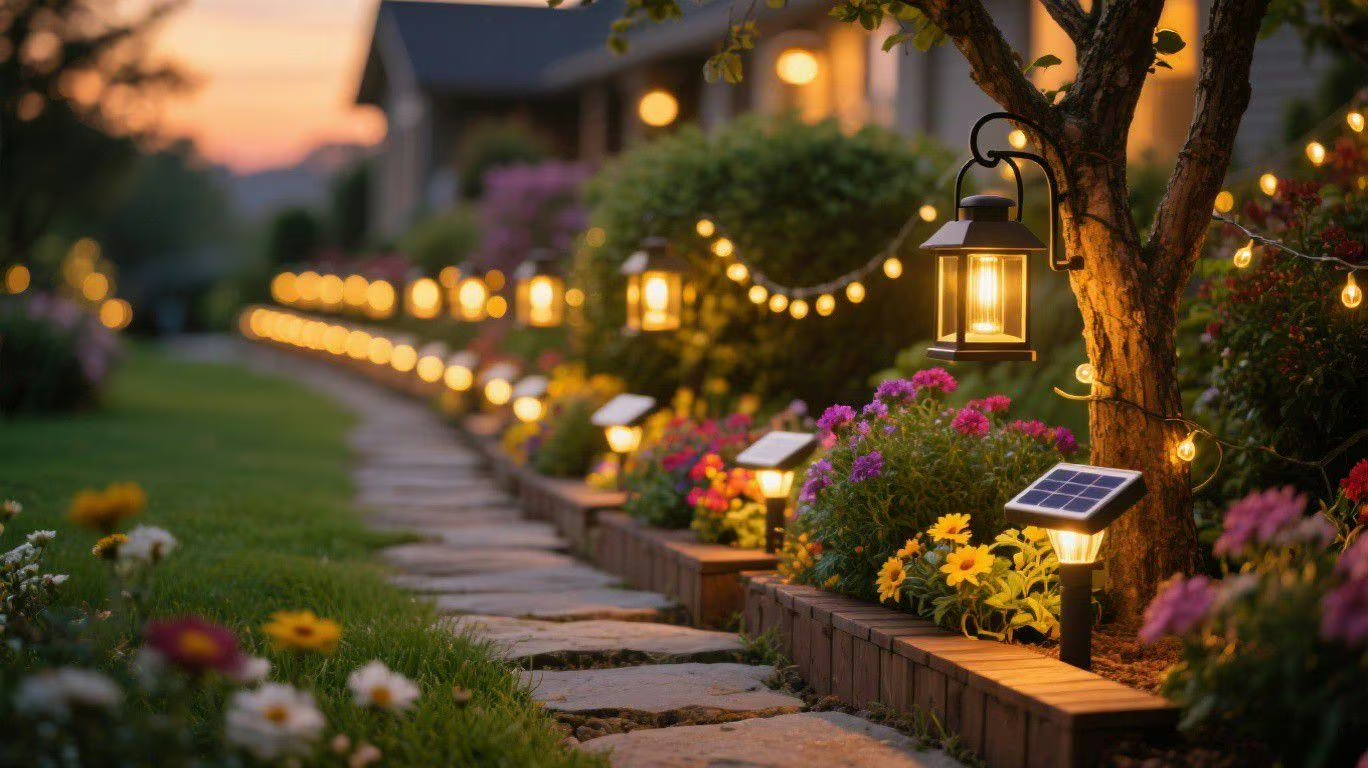
The myth landlords repeat to each other is that lighting a rental is charity: you pay for it, the tenant enjoys it, and the tenant after that breaks it. After years of keeping fixtures on tenant-occupied properties, I can report the math runs the other way. Good rental property outdoor lighting is one of the cheapest liability reductions and curb-appeal boosts available to a small landlord, and the fixtures that failed on my units were almost always the wrong fixtures in the wrong spots, not evidence of a wrong tenant.
The difference between a lighting budget that pays you back and one that evaporates comes down to four decisions: where you put light, what you expect to disappear, how much housing you pay for, and how the fixtures attach. None of them require an electrician, which matters, because every trade call on a rental eats the margin on a fixture ten times over.
A Lit Entry Is Liability Management, Not Decoration
Start with the walk from the curb to the door, because that is where the risk lives. First-time visitors arrive at unfamiliar houses, at night, carrying things, often in weather that makes surfaces slick. An unlit front step plus a delivery driver with two boxes is the classic combination, and the claim that follows names the property, not the driver’s shoes. You cannot eliminate the risk, but you can remove the darkness that turns a normal step into a guessing game.
The practical setup is modest: enough even light along the arrival path that every step edge is visible, and a bright, reliable source at the door itself. Motion-activated solar wall lights with motion sensing do this job well on rentals because they throw real light when someone approaches, sip battery the rest of the night, and need no wiring that a future panel upgrade or siding job has to work around. One at the door and one over the garage covers most single-family arrivals.
Do not forget the number itself. Tenants, guests, pizza, and furniture deliveries all hunt for an address in the dark, and on many rentals the digits are painted the same color as the trim. A lit number at the door or the curb turns every arrival from a slow pass into a first try, and it is the fixture that quietly works for you on nights nobody is home.
Budget for What Walks Away Between Tenants
Here is the line item most landlords refuse to write down: fixtures disappear. A stake light here, a lantern there, lost to a mower, a move-out truck, a tenant who genuinely believed the lights came with the lease as personal property. Plan for it the way you plan for touch-up paint, as a consumable. Fixtures that cost about the same as a pizza to replace stop being a security deposit argument and become a Tuesday errand.
This is exactly why inexpensive solar pathway lights in six-packs are the backbone of a rental walkway. If one vanishes between tenancies, the run still reads fine with five, and the replacement costs less than the drive across town. Keep two spares in a labeled box in the unit’s closet, and a dead light gets swapped at turnover instead of staying dark for a season while everyone waits for the next vendor quote.
Durability Tiers: Where to Spend and Where to Skimp
Spend at the door and the garage, where fixtures do safety work and get handled least. Those deserve sealed housings, honest weather ratings, and a mounting that survives wind and pressure washing. Skimp deliberately on the decorative mid-yard run, where the job is ambience and the acceptable failure mode is a dimmer glow in year two. Skip the premium decorative layer entirely on short-term tenants; save the firefly stakes and glass lanterns for the owner-occupied house, where you control the trimmer.
One free habit stretches every tier: treat a dead light as a battery question before a fixture question. A unit that quits in October is usually carrying a finished cell, and the five-minute check for why a solar light stopped working catches most of them. Swapping a battery at turnover costs a couple of dollars. Swapping six fixtures because nobody checked costs the whole lighting budget.
Tenant-Proof Mounting
How a light attaches decides how long it survives a rental. Stake lights belong set back a boot-length from the mow line, because string trimmers eat more fixtures than weather does. Wall lights belong screwed into the siding or trim with the supplied hardware, mounted above casual reach but below the eave, high enough that they are not a handle at kid height. Adhesive mounts that feel clever in May are on the ground by February after one hard freeze, so use screws and a driver bit you keep in the same closet as the spares.
One small placement rule protects the fixtures and the tenant relationship: nothing bright within view of a bedroom window, aimed at a neighbor’s yard, or positioned where a motion light will fire every time the person in 4B takes the trash out. Tenants forgive a lot from a landlord who did not light up their bedroom at midnight.
The Turnover Hour
Between tenants, while the unit is empty, spend one hour at dusk with a checklist:
- Walk the arrival path from the curb and confirm every step edge is visible.
- Wipe the panels, because a season of dust quietly starves the batteries.
- Swap batteries in any unit dimming before ten, and note the date on the new cells.
- Re-aim motion sensors that tenants adjusted, and reset any mode switches.
- Replace missing fixtures from the spares box, and restock the box.
That single hour, four times a year at most, is the entire maintenance commitment. Do it while the listing photos are being taken and the lit entry shows up in the shoot for free. Before the next vacancy, walk your arrival path at dusk with the current photos on your phone, and ask the only question that matters: would a stranger carrying boxes reach the door safely on the first try? If the answer is no, the fix costs less than the deductible you are protecting.