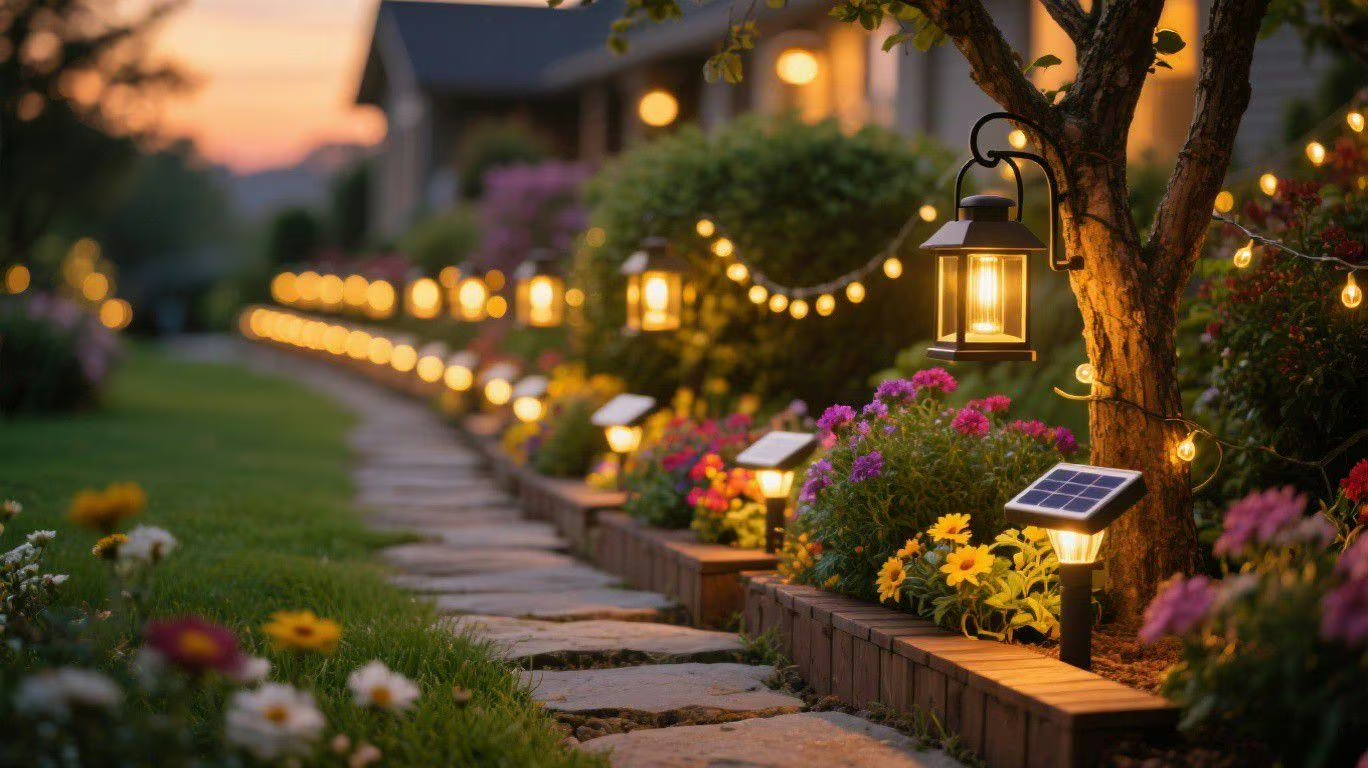
At two in the morning on Sunday, November 1, 2026, daylight saving time ends and your evenings get shorter by decree. The practical version: starting Monday it is fully dark before most people leave work, the after-school yard is a night yard, and every side gate, trash-can path, and shortcut your family has walked in daylight since March is suddenly a hazard. Daylight saving outdoor lighting is an event whether you planned for it or not. The reset takes about forty minutes, and the first Sunday in November is the right day to spend them.
The Five-O’Clock Walk-Through Comes First
Before you change anything, do one lap at half past five, in the new dark, and notice where you instinctively slow down. Those spots are the reset list: steps, gaps between fixtures, gates, the curb strip, the place where the driveway meets the grass. Write them down or take a photo, because in the morning you will not remember any of them, and the whole exercise depends on the list.
While you walk, count the strides between pools of light. Anything longer than a few steps on a walking route is a gap worth closing, either by moving a fixture or by borrowing one from a zone that lost its season. The standard is simple: every surface that feet actually touch should be lit by something.
The Zones That Suddenly Matter
- The side gate and the trash path. A once-a-week route in July becomes a once-a-week route in total darkness from now until March.
- The walkway and front steps. Trick-or-treaters are gone; the mail carrier, the school bus, and your own kids carrying things remain.
- The back step where the dog goes out. Nobody plans this zone; everybody trips in it.
- The driveway edge and the curb strip. Cars, storm drains, and the mailbox all sit in the dark at exactly the hour you come home.
The pattern across all four zones is the same: places that were ambient-light-optional in summer are load-bearing now. A set of pathway lights moved from the summer garden bed to the front walk, and a motion unit like the 100 LED solar wall lights on the side gate, cover most houses in a single afternoon.
Mode Changes That Stretch November Runtime
Short days mean lean charges from here on, so spend what charge there is deliberately. Steady fixtures go to their dimmer mode, which buys hours at almost no visual cost in winter, when pools of light read brighter against long darkness. Motion fixtures go the other way: raise sensitivity and let them fire briefly on demand instead of burning all evening. And put fresh cells in the two or three fixtures that matter most, because a battery that limped through October will not survive December.
The DST weekend is also the natural battery rotation point. Swap this year’s fresh cells into the fixtures on walking routes, and let last year’s cells finish their lives in decorative spots where quitting early is a shrug rather than a hazard. It costs nothing, and it puts strength exactly where the season needs it.
The weekend is also a good moment to fix mounting problems you have been stepping around since June. A fixture screwed to a fence board that has warped, a stake leaning since the last mowing, a panel now shaded by the awning you added in August: none of these are lighting problems, but each one quietly taxes the system. Twenty minutes with a screwdriver and a level restores more output than most people expect, and it costs nothing.
Reposition for a Sun That Moved
The sun did not move, but it dropped, and the panels installed in June no longer see the sky they were aimed at. Walk the yard at noon and look for panels now sitting in eave or fence shade, then tilt or slide those fixtures toward open southern sky. It is the same geometry problem every fall, and ten minutes with a frost-free afternoon fixes more of it than any new purchase would.
One thing worth adding rather than adjusting: lit or reflective house numbers and a marker light at the driveway cut, if you do not have them. November is when delivery drivers, rideshares, and the plow contractor all find your place in the dark for the first time. The cheapest fix is making the address legible from the street at thirty feet, and it usually pays for itself before the first snow.
Forty minutes, one Sunday: walk, list, move, switch modes, swap batteries. If the list from your five o’clock lap turns out longer than the afternoon, prioritize walking surfaces first and let the decorative zones wait a week. Do it on November 1 and the yard enters winter looking like someone thought about it, because someone did.