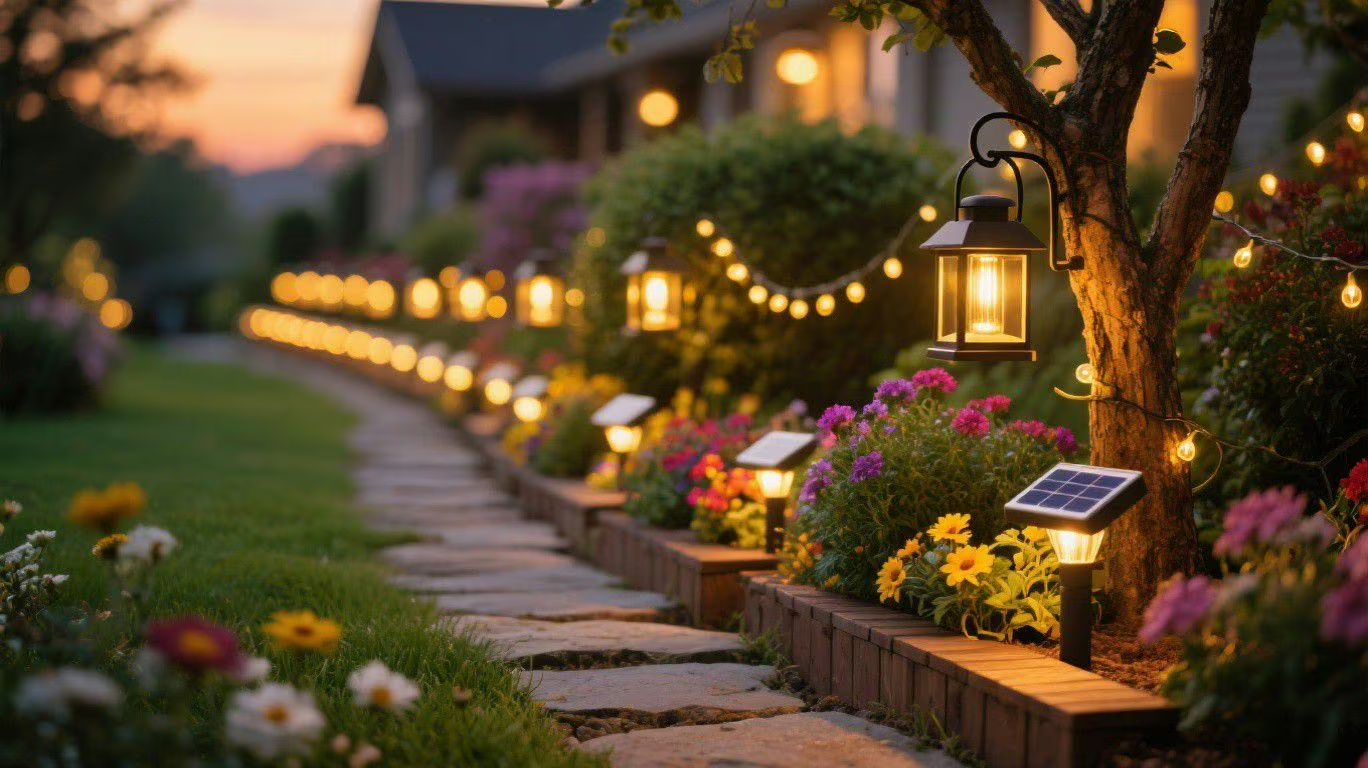
When was the last time you sat in your own backyard after dark with nothing in your hands but a drink? For most homeowners the answer involves a special occasion, because their backyard at nine is unprepared: dark, cold-feeling, lit only by the kitchen window and whatever the porch fixture throws across the grass. The best backyard date night ideas are never the elaborate ones. They are ten-minute arrangements of furniture and light in a yard that is already wired for the mood, because the lights live out there full time.
That is the whole premise: install once, and date night becomes a decision instead of a project. The three setups below each take ten minutes from normal to romantic, assuming the solar fixtures are already standing from summer.
Why Date Night Fails in Most Backyards
Three reasons, and none of them are romance-specific. The yard is dark, obviously. It feels exposed, because a porch floodlight on full is the opposite of atmosphere and lights you like an exhibit. And it demands effort at seven in the evening, when nobody has any left. Solar lighting fixes all three if it is placed right: low, warm, scattered sources at seating height instead of one glaring overhead; a zone away from the house glare; and zero setup on the night itself, because the fixtures charge whether you have plans or not. The fix is infrastructure, not improvisation.
Weather plays a smaller role than people assume. A cool evening is a blanket-and-jacket problem, not a cancellation, and the best October dates are often the ones where somebody brings a thermos. What actually kills the evening is standing in the dark fiddling with fixtures while your date holds both drinks.
Setup 1: Picnic Blanket Glow
The move: a blanket at the yard’s quiet edge, a basket, two glasses. The lighting: one strand of solar string lights looped low along a fence or between two stakes to frame the blanket zone, plus a single stake fixture nearby so nobody pours wine into the grass. Ten minutes is shaking out the blanket, repositioning two stakes, and setting the strand to steady warm. Timing matters more than gear here: start while dusk is still blue so the lights come on during the first glasses, not after the cold does. In late October, full dark lands somewhere between six and seven for most of the country, so a five-thirty start is the sweet spot.
Setup 2: The Two-Chair Patio
Two chairs, one small table, and light at seated eye height. A warm lantern-style wall light on its steady low mode is ideal, because side light flatters faces and overhead light interrogates them. The geometry trick is angle: set the chairs at ninety degrees to each other rather than opposite, so you are both looking partly at the yard and partly at each other. Ten minutes: pull two chairs out of the dining set, angle them, flip the lantern to low, and put the drinks where neither of you has to get up for them. A small side table beats a coffee table between the chairs; you want to see each other, not the furniture.
Setup 3: Fire Bowl Adjacency
If you own a fire bowl, you are most of the way there; firelight is still the best light ever invented. What it lacks is approach and exit. Fix both with path-level lights marking the route from door to fire, and one warm source behind the seating so faces are not all fire-side orange and sooty shadow. Ten minutes: reposition a few stakes along the walk and set a lantern-scale fixture on low behind the chairs. If you want a table-level accent, tabletop lanterns built for outdoor dining slot into this scene perfectly. Five of your ten minutes can go to fire-bowl maintenance, too; a clean burn is part of the lighting.
Timing It Around Dusk
Solar fixtures come on by themselves at dusk, so the scheduling is built in. What you control is the start and the modes. Begin at golden hour so the transition happens during drinks rather than during setup. Lock every fixture to a steady mode before the evening, because a strand that starts cycling colors mid-conversation is a mood-killer with no recovery. And after a run of grey days, give the key fixtures one good sun day before a planned evening; a lean charge produces lights that quit at nine, which is the least romantic thing a light can do. Keep the strand’s panel in mind as well: a string that spent the day in shade starts the evening at half charge, so nudge its panel toward open sky in the afternoon on any day you know matters.
Pick one setup for this weekend. Install the two fixtures it needs, a strand and a lantern covers all three, and after that date night is a ten-minute decision you can make at a quarter to six on a Tuesday. That is the entire point.